
Vladimír Verner has recently successfully passed the habilitation procedure at the Faculty of Tropical AgriSciences. His research has been dedicated to exploring the potential of integrating value chains that consider the unique characteristics of local plant species with the goal of promoting sustainable farming systems and effective strategies for poverty alleviation.
Enhancement of the long-term sustainability of the collection and commercialisation of local medicinal and aromatic plants. In March 2024, representatives of the Faculty of Tropical AgriSciences, in collaboration with colleagues from Rhine-Waal University (Germany) and the University of Gastronomic Sciences
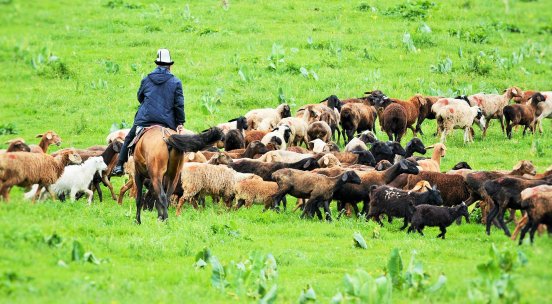
In Kyrgyzstan, most farming systems are based on animal husbandry, which depends on mixtures of crops and pastures around settlements and higher-elevation summer pastures. These farms face the problems of insufficient fodder production and pasture degradation due to overgrazing, resulting in low livestock productivity and reduced household incomes. This study used multivariate analysis to develop a consistent typology of smallholder farms in the Tien Shan mountainous range.
The paper, published in the journal Land, results from a long-term cooperation between the University of Central Asia, Rhine-Waal University and CZU Faculty of Tropical AgriSciences (research teams TRIBE and TRACE).
Analyzing data from 235 farm-households and evaluating key classification variables, we identified two distinct farming systems, upper and lower mountain farms, based on socioeconomic and agro-ecological characteristics. Understanding the diversity and types of local farming systems is crucial for setting efficient and suitable policies to enhance livelihood and sustainable use of natural resources.
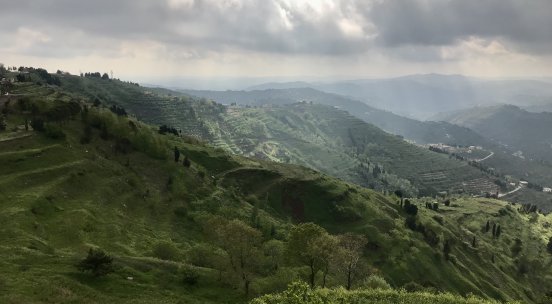
Eleven years of the war in Syria have caused substantial socioeconomic and cultural changes, and have led to widespread food insecurity across the country. Our recently published study in the journal Economic Botany (IF: 2.6, Q2 in Plant Sciences) seeks to scrutinize the impact of socioeconomic factors on the use of wild food plants during the conflict. The study revealed that the number of used species had a significant statistical relationship with informant age and annual household income, while informant gender was a predictor for both reliance on wild plants and frequency of use.
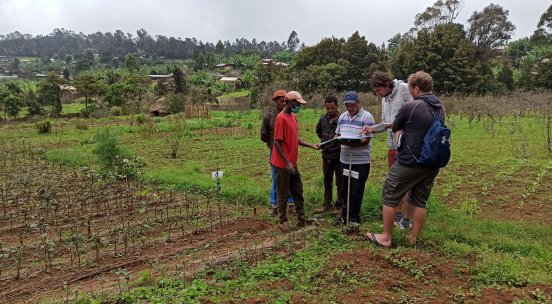
The project aims to support education and research at Arba Minch University (AMU) through practical teaching and joint supervision of master's theses. This is achieved by the cooperation of academic staff from two Czech universities (MENDELU and CZU) and by the involvement of local Ethiopian teachers and experts.
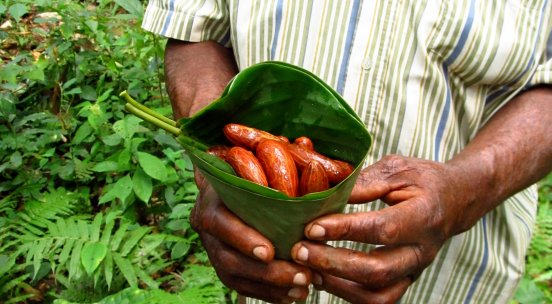
The tropical forests of Central Africa represent an immense diversity of valuable plant species that local people have long exploited for their needs. Despite their economic importance, these species often remain marginal and neglected by mainstream development or agricultural policies. The actual paper published in Economic Botany investigates management practices, plant part preferences, morphological characteristics, and the economy of bitter kola in different regions of the country.
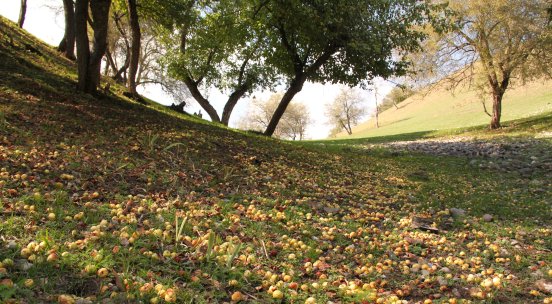
The excessive collection of non-timber forest products and overgrazing of forest pastures negatively affect forest regeneration and biodiversity and subsequently impacts sustainable livelihoods in southwestern Kyrgyzstan. Understanding the diversity and typology of local farming systems is crucial for setting efficient and suitable policies to enhance livelihood and conservation. The actual paper, published in the journal Agriculture, is the result of a long-term cooperation between University of Central Asia, Rhine-Waal University and CZU Faculty of Tropical AgriSciences (research teams TRIBE and TRACE). The paper identifies three main farming systems with different livelihood strategies and challenges. The authors provide specific farm-type recommendations to increase the sustainable use of natural recourses in the target region.
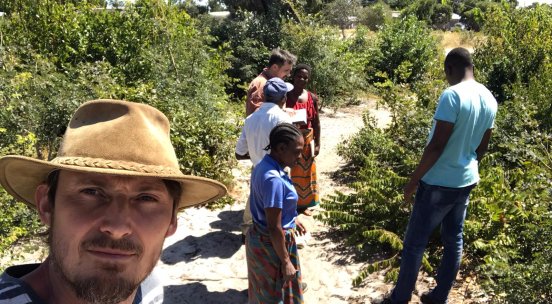
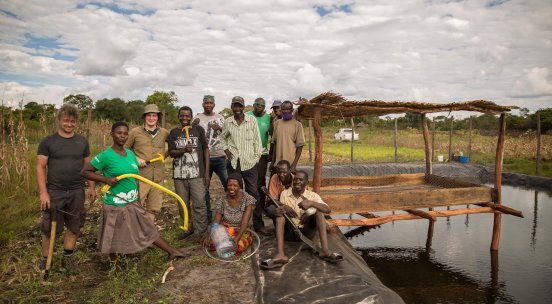
The team from the CZU, namely Vladimír Verner, Radim Kotrba, Zbyněk Polesný, Jan Staš from FTZ and Miloslav Petrtýl from FAPPZ, is currently conducting fieldwork in the Western Province of Zambia. The activities are realized in the frame of implementation of two development projects, namely "Integrated Farming II" led by Mendel University in Brno and "Agribussines4LIFE “ led by Charita Czech Republic.
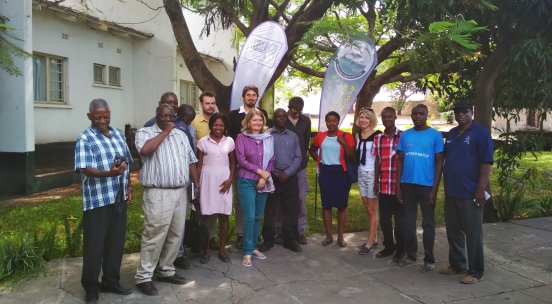
A New project within H2020 programme titled „Long-term Europe-Africa Partnership for Food and Nutrition Security, and Sustainable Agriculture (LEAP4FNSSA)” was officially launched in Accra, Ghana at these days.
Staff team from CULS Prague, FTA and FAFNR, is helping with implementation of three development projects funded by the Czech Development Agency, in cooperation with Caritas Czech Republic, University of Barotseland,