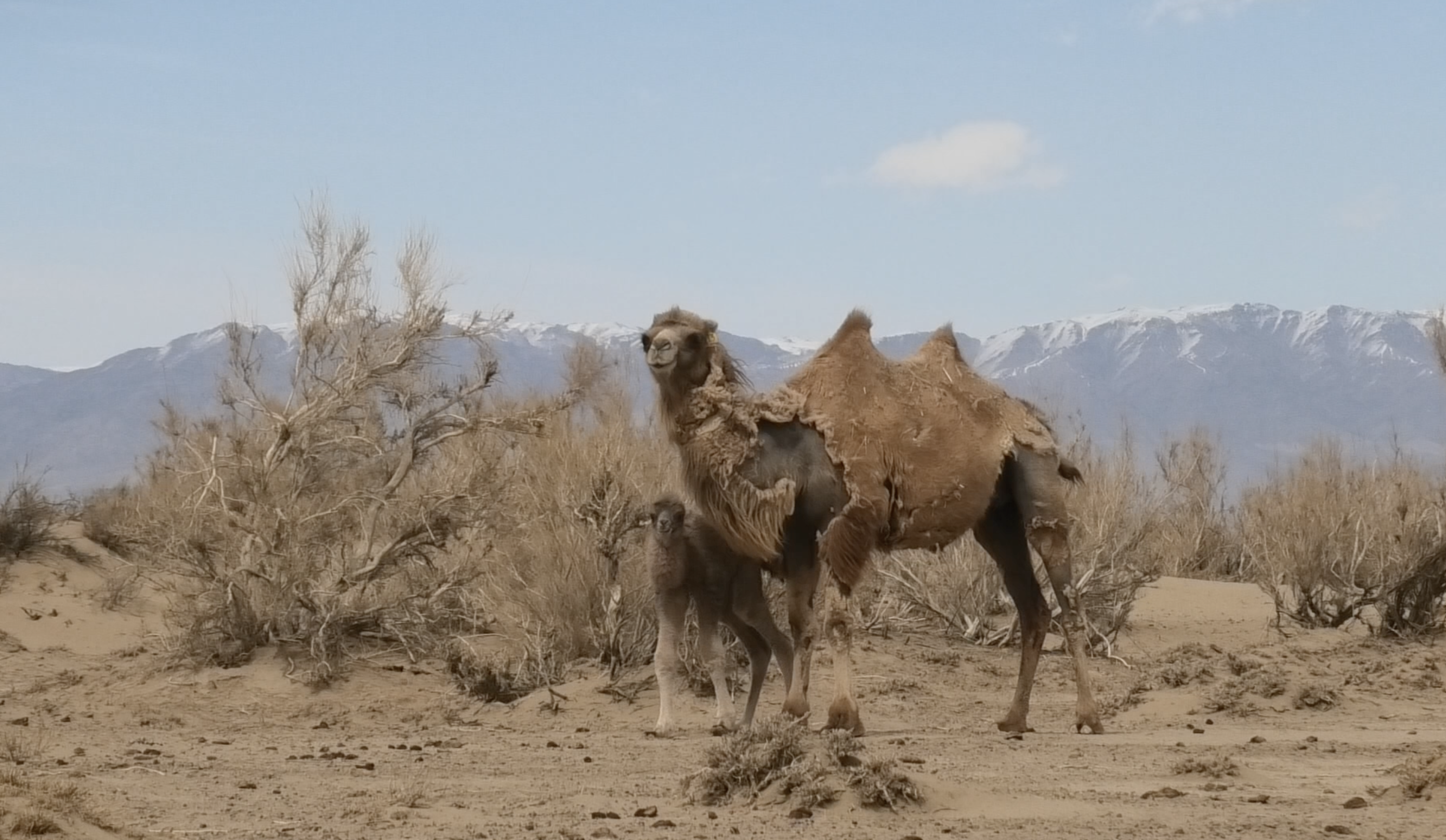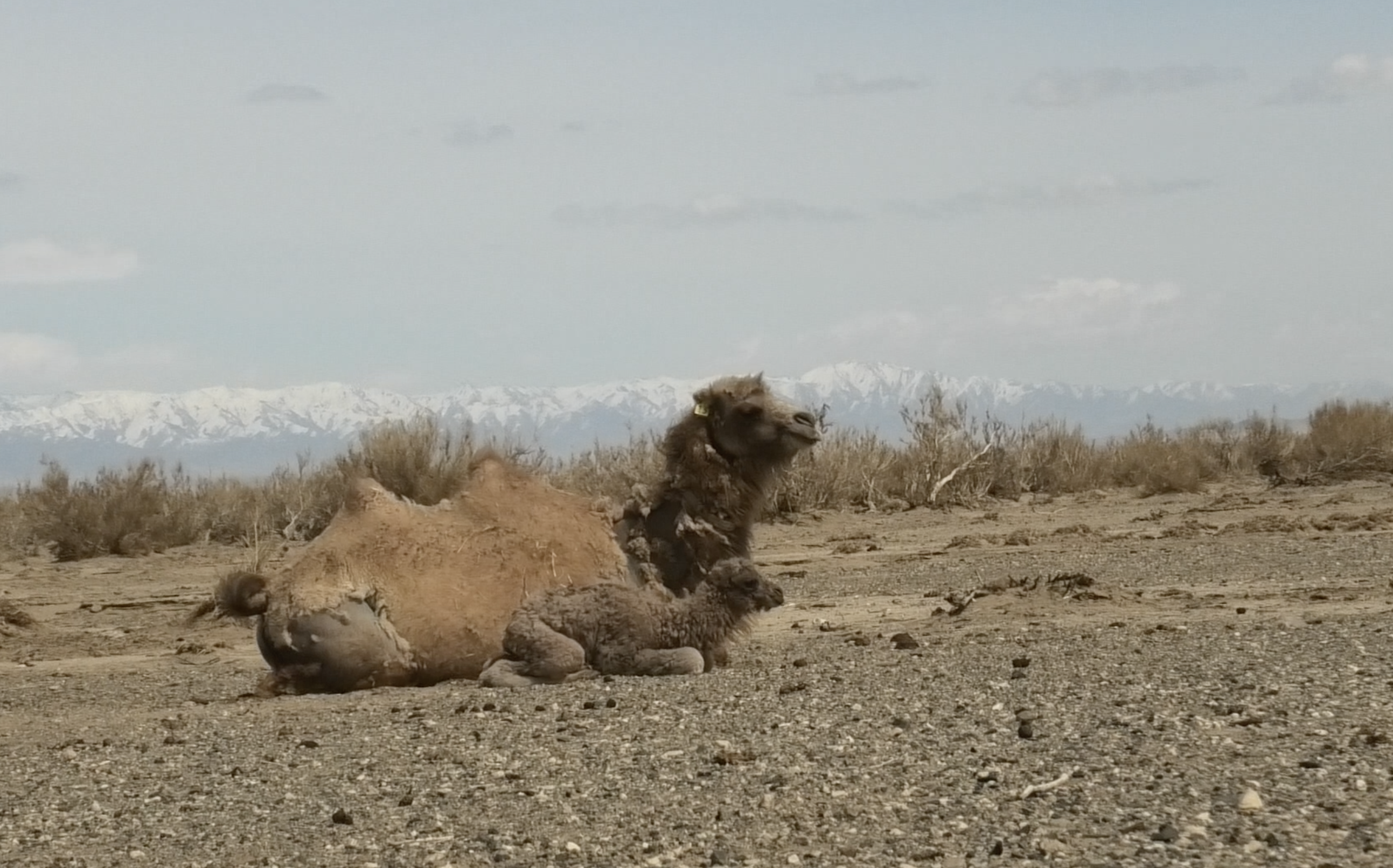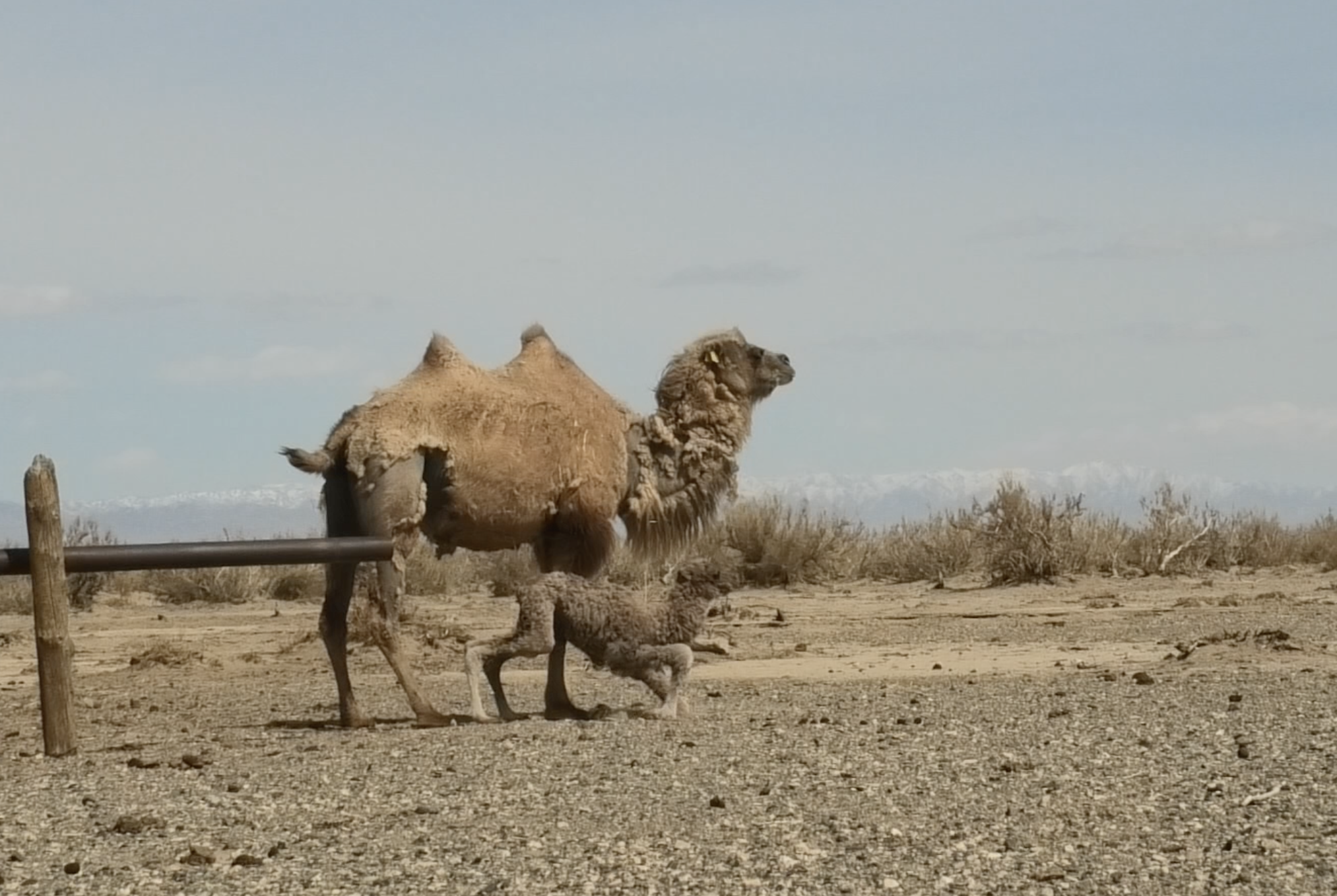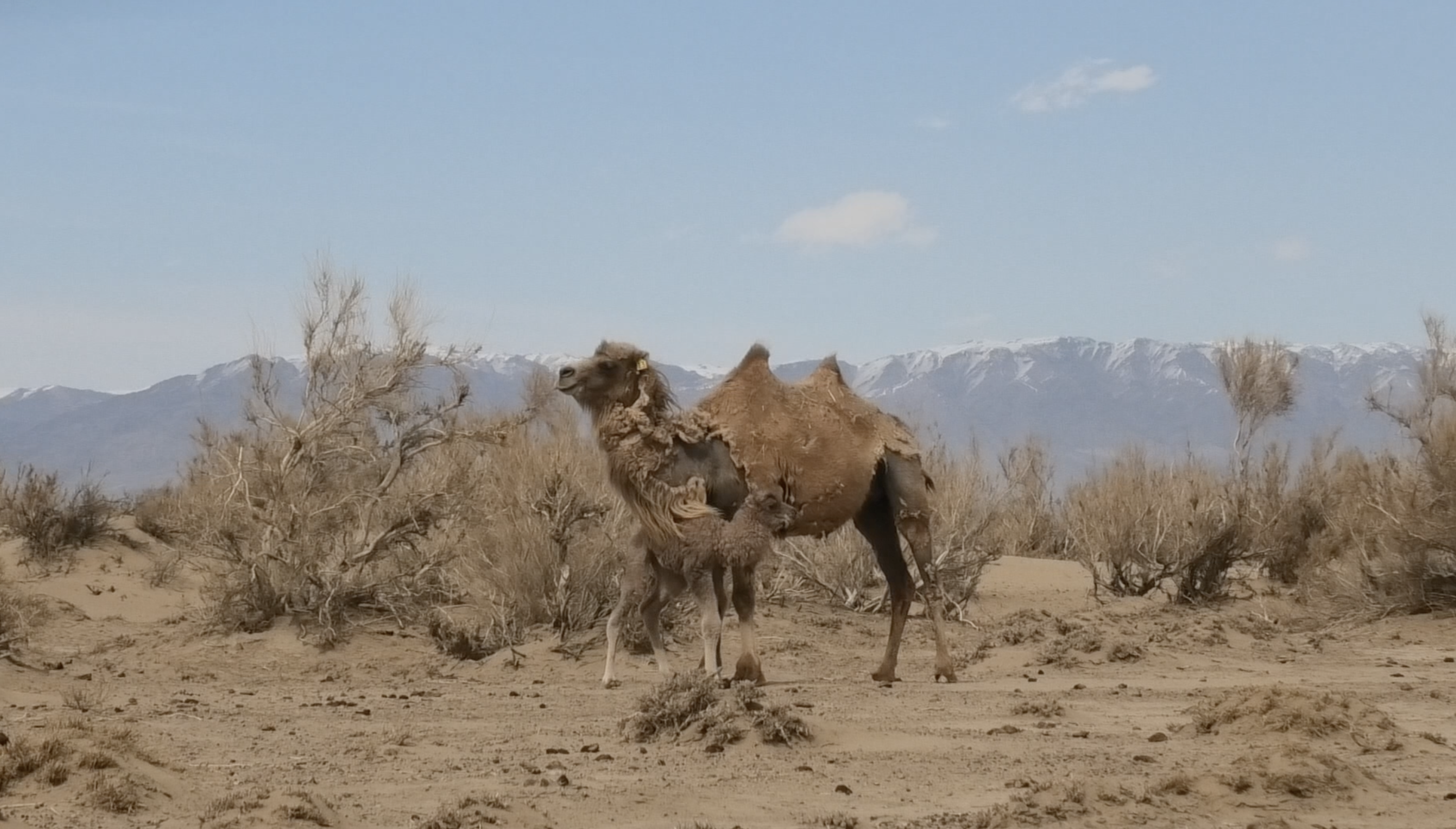

Martina Sihelská, a student of the master’s programme Wildlife and Livestock Production, Management and Conservation at the Faculty of Tropical AgriSciences, Czech University of Life Sciences Prague, has published a scientific article presenting the first detailed observation of a wild camel (Camelus ferus) giving birth in natural conditions.
The research was conducted during her fieldwork in the Mongolian part of the Gobi Desert, where she collected data for her master’s thesis titled Behavioural Ecology and Social Dynamics of Wild Camels (Camelus ferus) in the Gobi A Desert (Mongolia). The research was carried out under the supervision of Dr Komárková and Dr Fedorová and in collaboration with an international team of experts.
One of the rarest large mammals on the planet
The wild camel (Camelus ferus) is among the most endangered large mammals in the world. Today, fewer than one thousand individuals remain in the wild, primarily in remote regions of the Gobi Desert in Mongolia and China.
Although these camels are remarkably adapted to extreme desert conditions — able to survive with minimal water and food — scientists still know relatively little about their biology and behaviour. Each new observation therefore contributes valuable knowledge for understanding their ecology and supporting conservation efforts.
Field research in a strictly protected area
Martina conducted her field research in the buffer zone of the strictly protected Great Gobi A area in Mongolia, specifically at the Zakhyn Us Wild Camel Breeding and Research Centre.
As part of her research, she studied camel behaviour using ethological methods. Each day she recorded the animals’ activity according to a predefined ethogram while also documenting spatial relationships and distances between individuals. The aim of her research is to better understand social bonds, spatial behaviour and daily activity patterns of wild camels.
During this fieldwork, however, she managed to capture an exceptionally rare moment.
Witnessing a birth in the desert
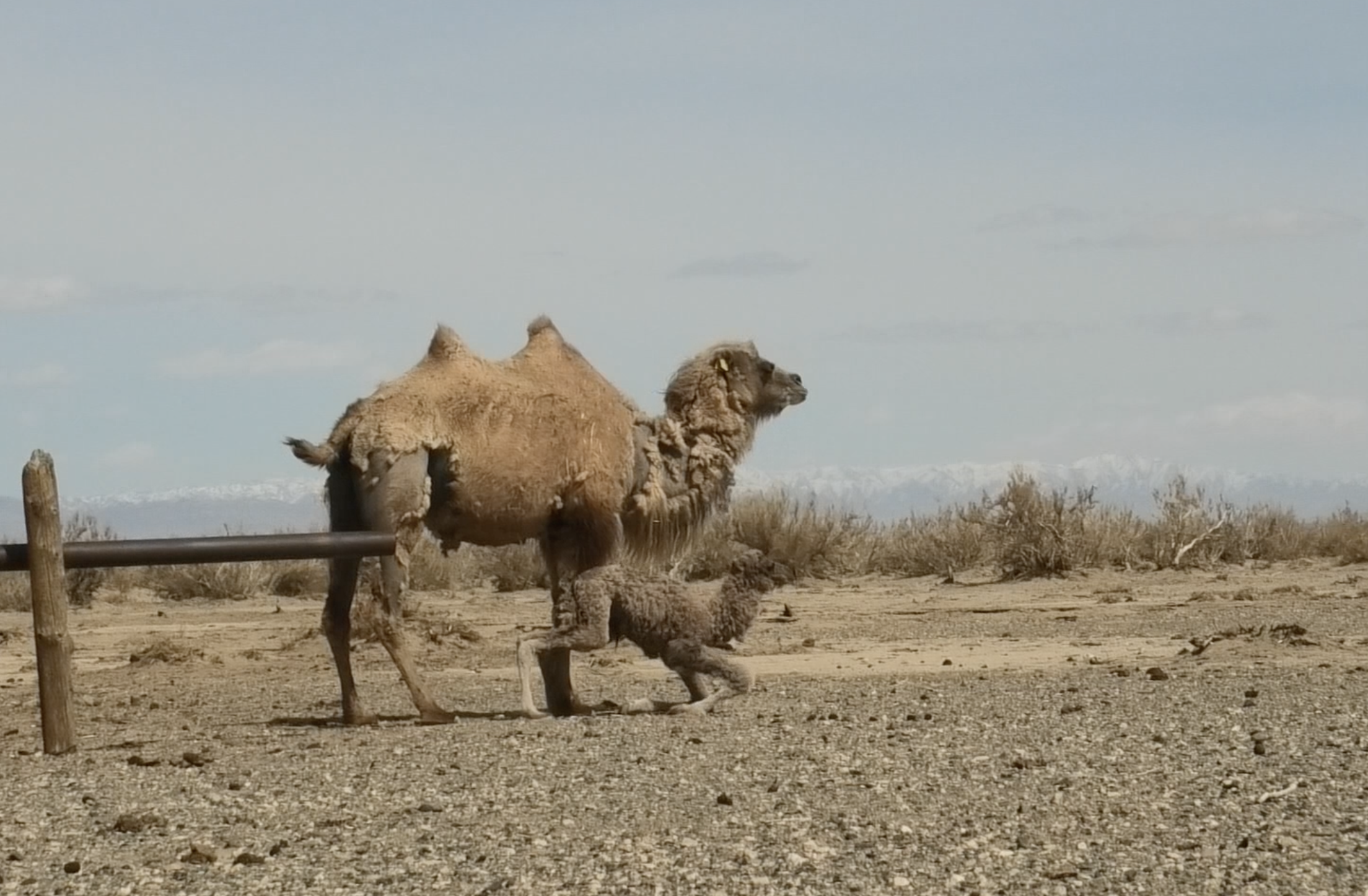
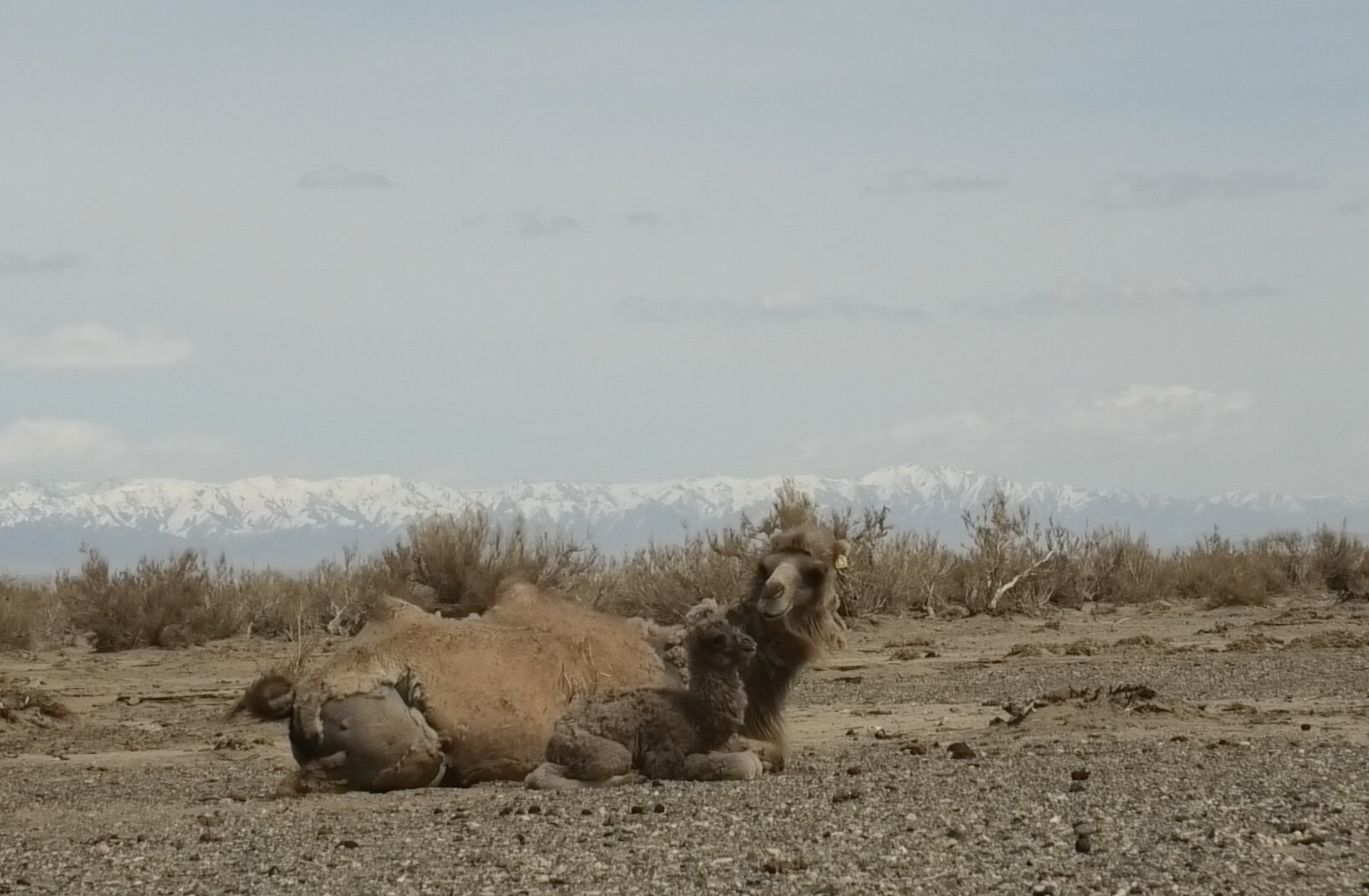
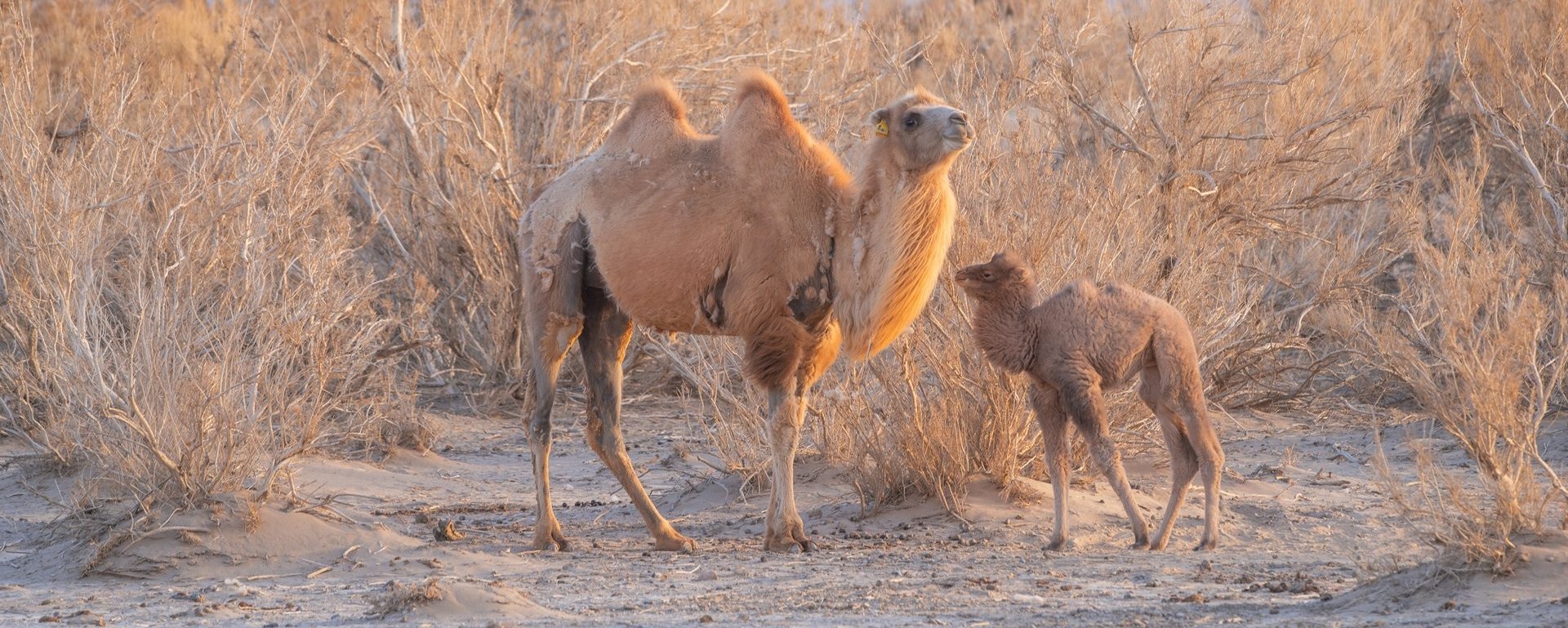
While observing a herd, Martina witnessed the birth of a female wild camel — an event that has only rarely been documented in the wild.
The detailed observation allowed researchers to record the entire birth process as well as the first moments of the calf’s life. The newborn stood up approximately 25 minutes after birth and began suckling shortly afterwards. Such rapid mobility is crucial for survival in open desert environments, where young animals must quickly move together with their mother and avoid predators.
The observation also revealed strong protective maternal behaviour, with the mother actively defending the calf from other animals.
“For me, the camel embodies everything admirable about life in the desert – endless resilience, strength and gentleness. The most powerful moment for me was witnessing the birth of a calf in one of the harshest environments on the planet,” says Martina Sihelská.
Research important for species conservation
Wild camels reproduce very slowly — females usually give birth to a single calf approximately once every two years. Any new insights into their reproductive behaviour are therefore important for the conservation of this critically endangered species.
The observation published in the scientific journal thus provides valuable information about a previously little-documented stage of the life cycle of wild camels.
Research made possible through international cooperation
The field research was made possible thanks to cooperation with Prague Zoo and the support of the Wild Camel Protection Foundation, an organisation dedicated to the long-term conservation of this extraordinary species.
In addition to scientific work, Martina also had the opportunity to experience the life of local herders. She spent part of her stay living in traditional gers (yurts), where she encountered their daily lifestyle and deep connection to the desert landscape.
“Their hospitality and acceptance were just as powerful an experience for me as the research itself,” Martina adds.