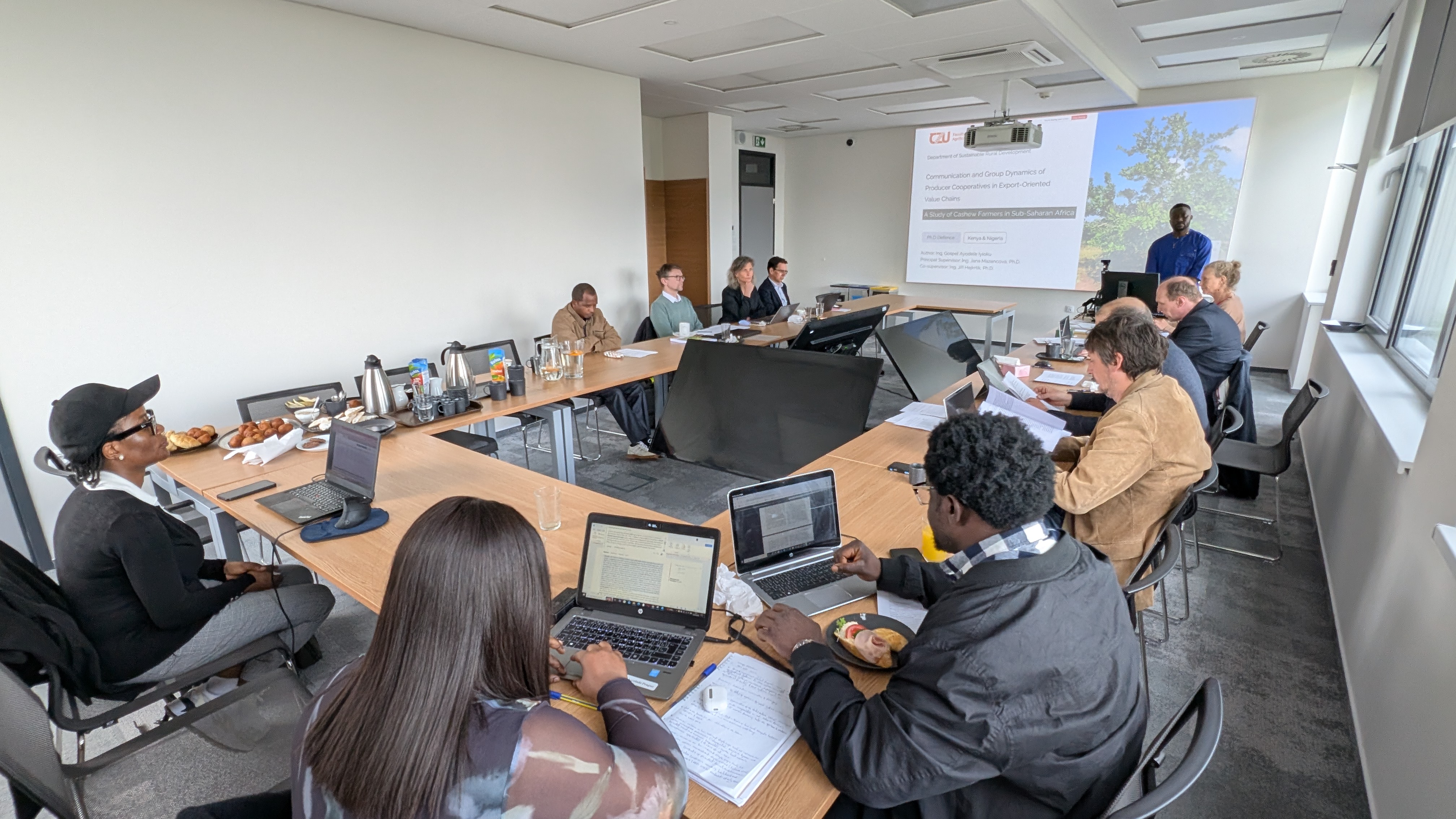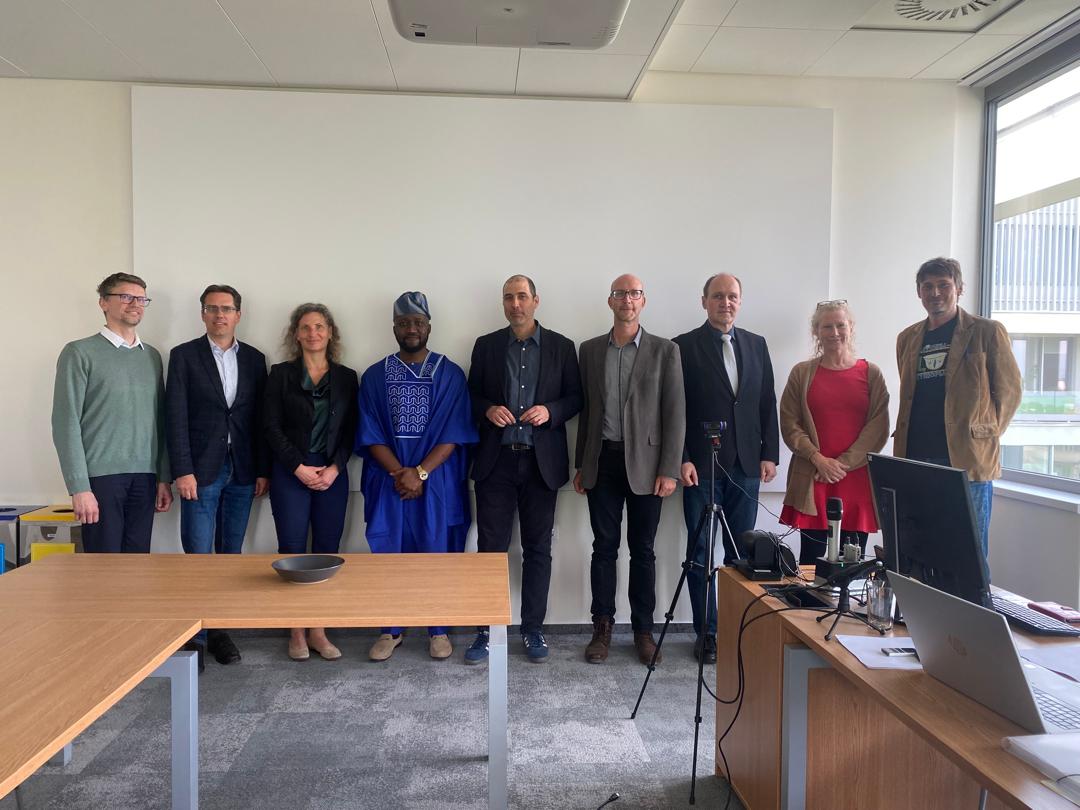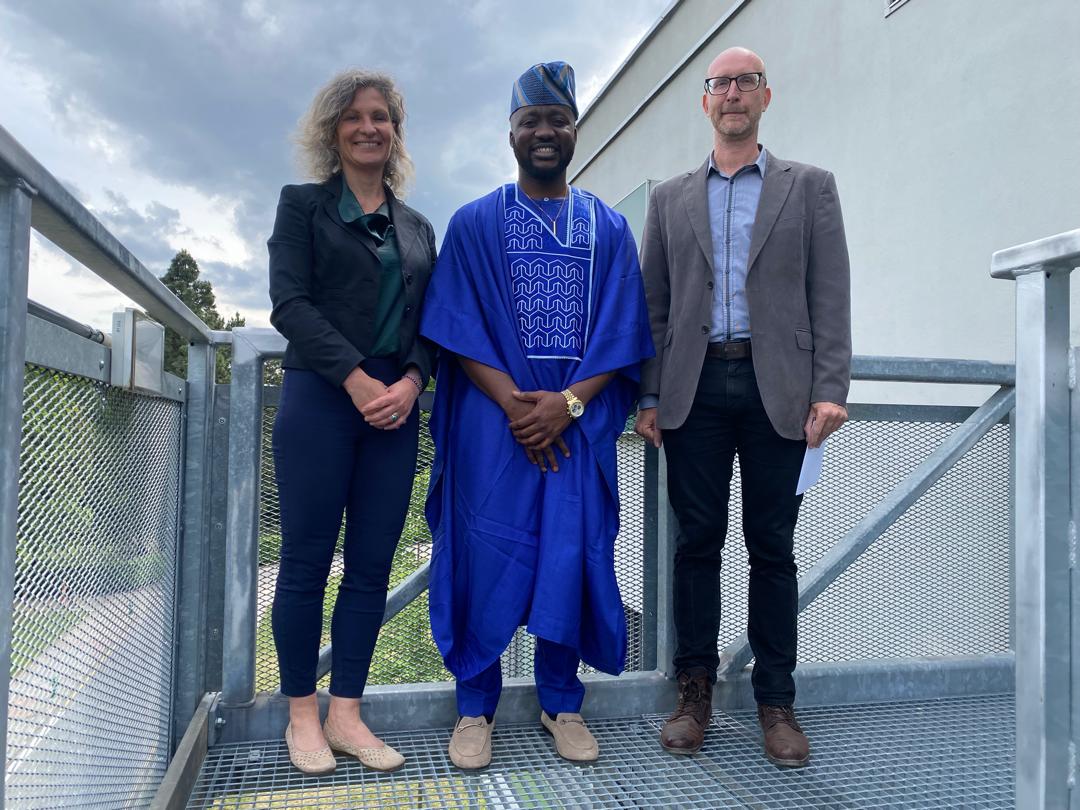

On 15 May 2026, Ing. Gospel Ayodele Iyioku, member of the Cooperative Research Group, successfully defended his PhD thesis at the Czech University of Life Sciences Prague, Faculty of Tropical AgriSciences, earning the degree by unanimous vote. Supervised by Ing. Jana Mazancová, Ph.D. and Ing. Jiří Hejkrlík, Ph.D., his dissertation titled "Communication and Group Dynamics of Producer Cooperatives in Export-Oriented Value Chains: A Study of Cashew Farmers in Sub-Saharan Africa" examined why smallholder farmers intend to join export-oriented cooperatives, and why those drivers differ across contexts. Using a mixed-methods design and surveys of 570 active cashew farmers (249 in Kenya, 321 in Nigeria), the study combines Probit regression, Structural Equation Modelling, and Chi-square analysis with the Theory of Planned Behaviour, Social Capital Theory, and Random Utility Theory to link communication patterns, social networks, farmer, farm and household characteristics, and psychological factors to cooperative membership intentions.
The results show that access to trusted agricultural information through formal networks is a strong driver in both countries, but trust is built in different ways: in Kenya, formal communication channels and direct knowledge about cooperative benefits are decisive, especially for educated farmers and women who see cooperatives as a path to fuller market integration; in Nigeria, the credibility of respected individuals matters more than the channel itself, and commercially established farmers with larger cashew operations are most likely to intend to join. Subjective norms, in terms of pressure from peers, family, and experts, matter in both settings, though they operate through community expectations in Kenya and traditional social hierarchies in Nigeria. Although survey data showed no statistically significant gender differences in reported information sources, structural barriers to women’s full participation remain. The thesis concludes that cooperative promotion must be context-specific: Kenya needs structured, participatory training that builds institutional trust, while Nigeria should enlist respected leaders as cooperative champions. Overall, the work advances research on collective action, export value chains, and inclusive rural development in Sub-Saharan Africa.