
Traditional knowledge of medicinal plants represents one of the oldest forms of health care and continues to play a vital role in the lives of millions of people worldwide. A new scientific study co-authored by Assoc. Prof. Zbyněk Polesný and FTZ graduate Naji Sulaiman from the Faculty of Tropical AgriSciences (FTZ), Czech University of Life Sciences Prague (CZU Prague) focuses on the ethnobotany of herbal teas in the coastal region of Syria – an area with an exceptionally rich yet still insufficiently documented tradition of folk medicine.
The study entitled Where medicinal plants are enjoyed as a tea: Ethnobotany of herbal teas in the coastal region of Syria was published on 9 February 2026 in the prestigious international scientific journal Plant Biosystems. The authors of the article are Naji Sulaiman, Andrea Pieroni, Renata Soukand, and Zbyněk Polesný.
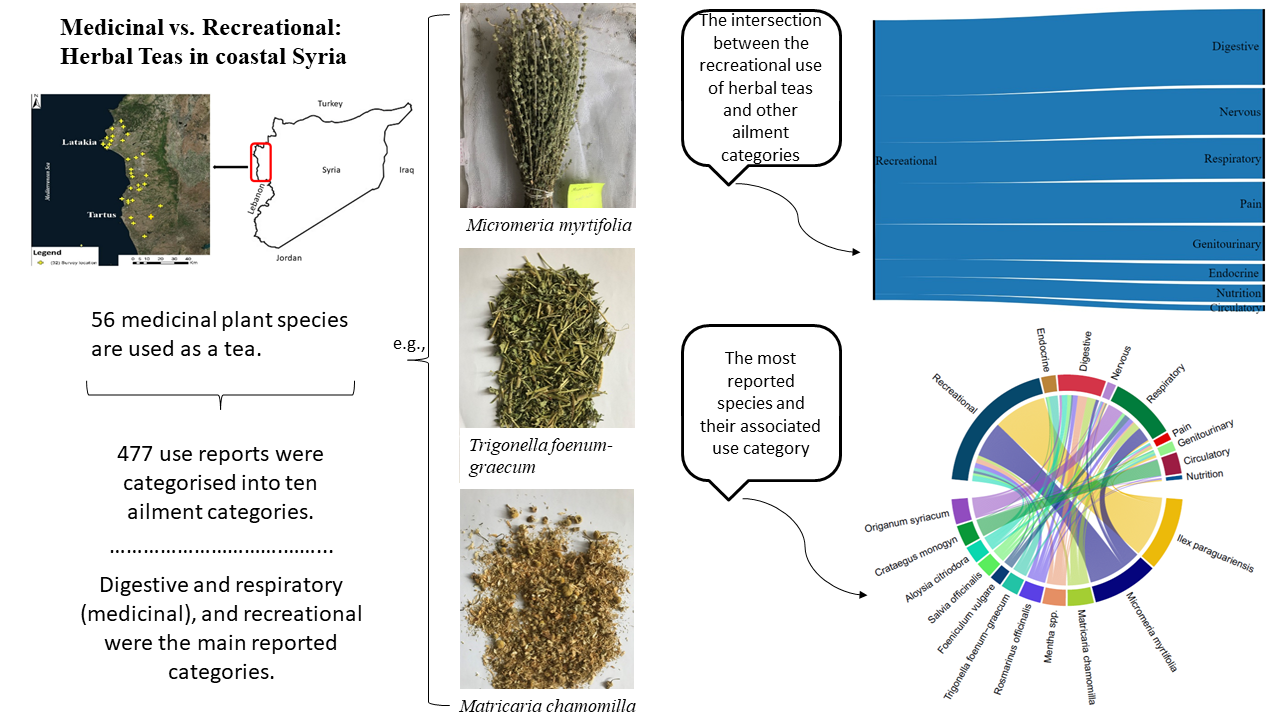
56 Medicinal Plant Species
The research was conducted between 2018 and 2020 in 32 villages in coastal Syria. Its main objective was to document which medicinal plants are traditionally used in the region in the form of herbal infusions, and to better understand the relationship between their medicinal and recreational use.
The results show that local communities use 56 medicinal plant species, most commonly prepared as herbal teas to treat digestive and respiratory disorders. These are health issues that people often address even in the absence of access to modern medical care.
When Healing Becomes Part of Everyday Life
The study focuses on the intersection between medicinal and recreational uses of herbal teas, offering new insights into ethnobotanical knowledge of medicinal plants in a previously under-researched region.
The findings reveal that the boundary between medicinal and recreational uses of herbal teas in the study area is often blurred. For local inhabitants, herbal teas are therefore not perceived solely as “medicine”, but also as an integral part of daily culture, hospitality, and lifestyle.
Culturally Significant Species with Future Potential
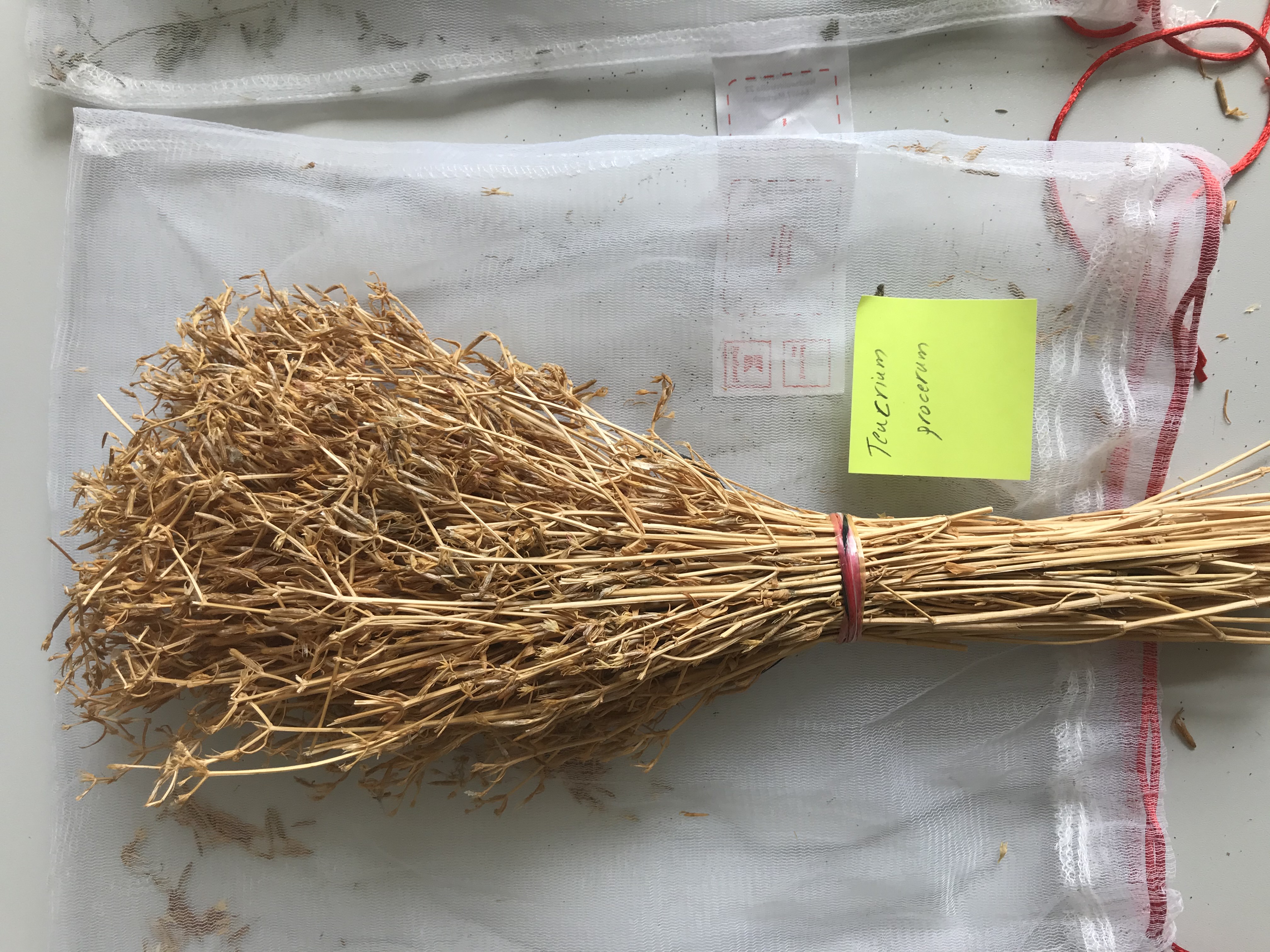
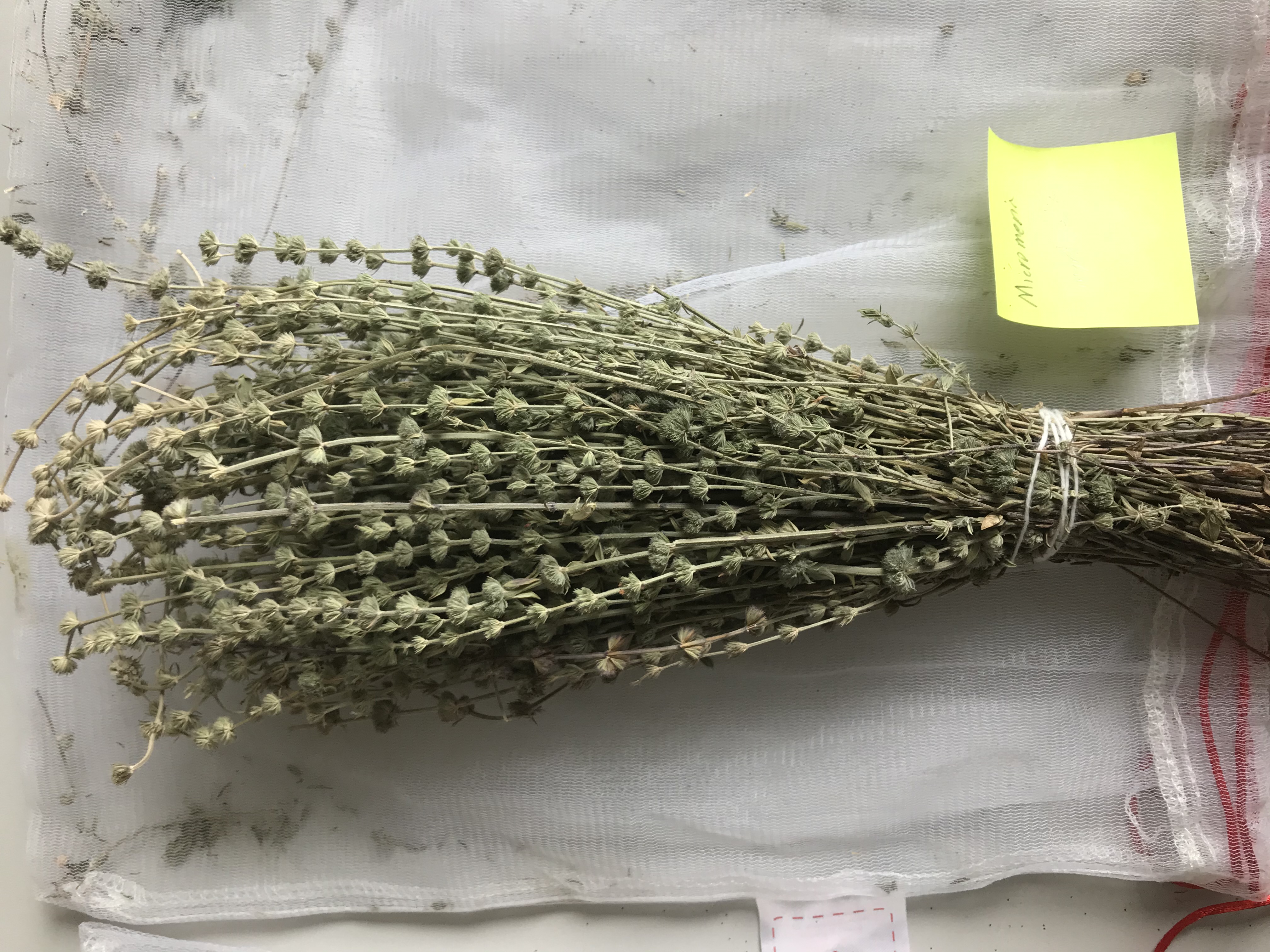
The research also identified the most culturally salient plant species with potentially promising medicinal and economic value. These include, for example, Micromeria myrtifolia and Teucrium procerum (Lamiaceae) – relatively little-studied species with possible pharmacological potential.
Contribution to Knowledge Preservation and Future Research
The study highlights the need for further laboratory research into the biological activity of lesser-known plant species that are traditionally used in the region but have not yet been sufficiently studied from a scientific perspective. At the same time, it contributes significantly to the preservation of traditional knowledge, which is increasingly threatened in many parts of the world by globalization, urbanization, and changing lifestyles.
This research exemplifies how ethnobotany connects science, local knowledge, and sustainable development – principles that have long been central to the academic and value-based mission of the Faculty of Tropical AgriSciences, CZU Prague.