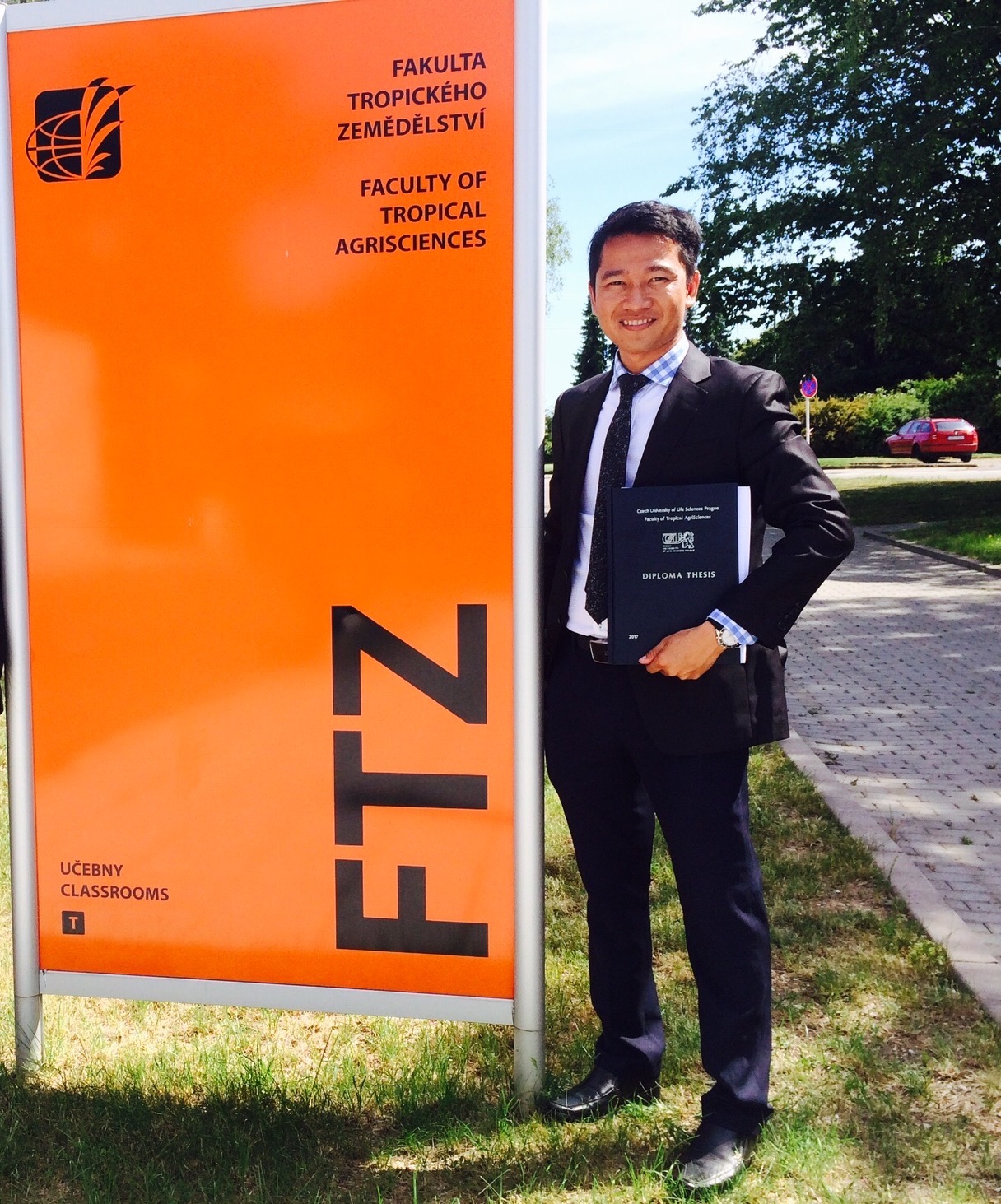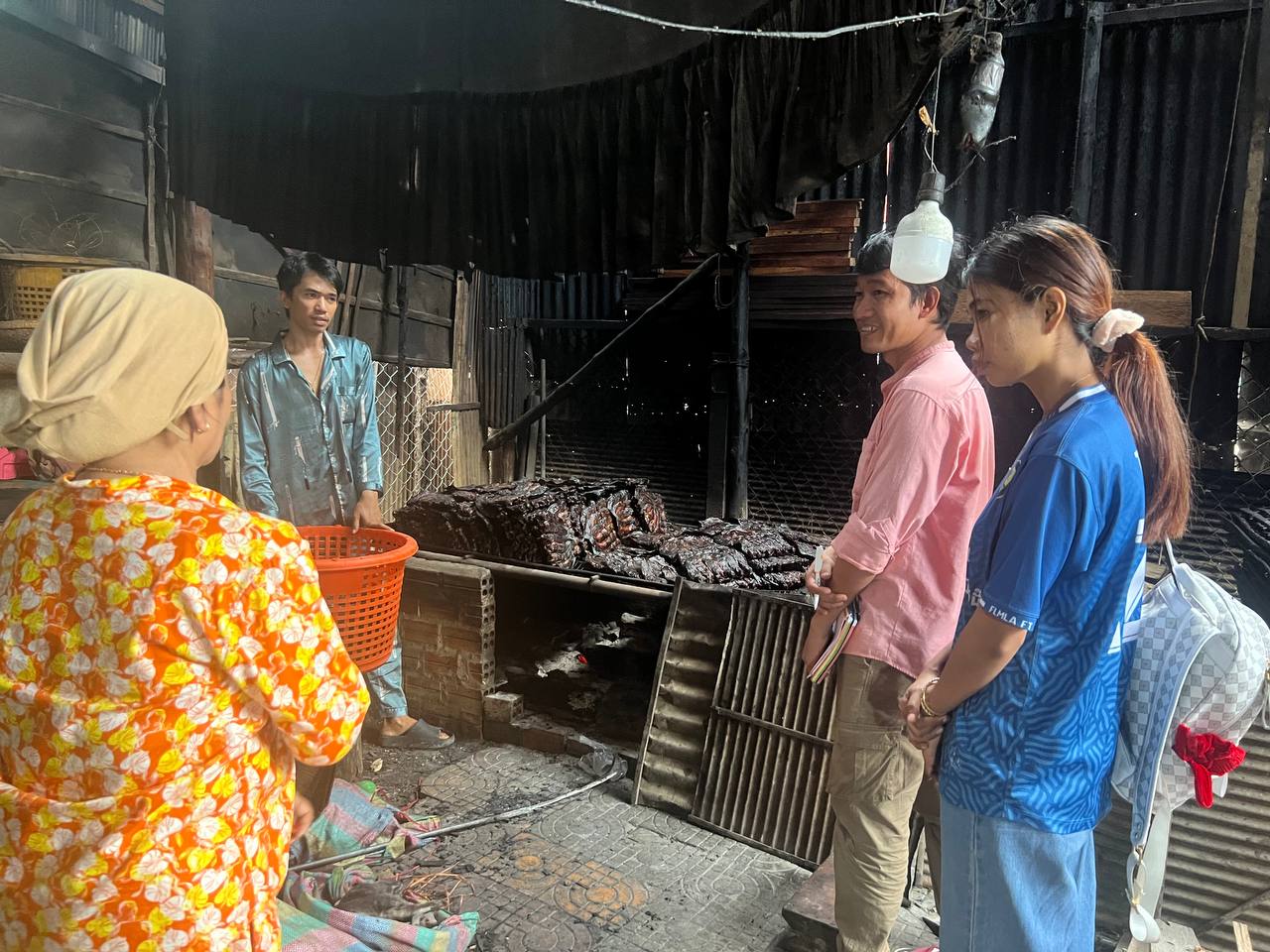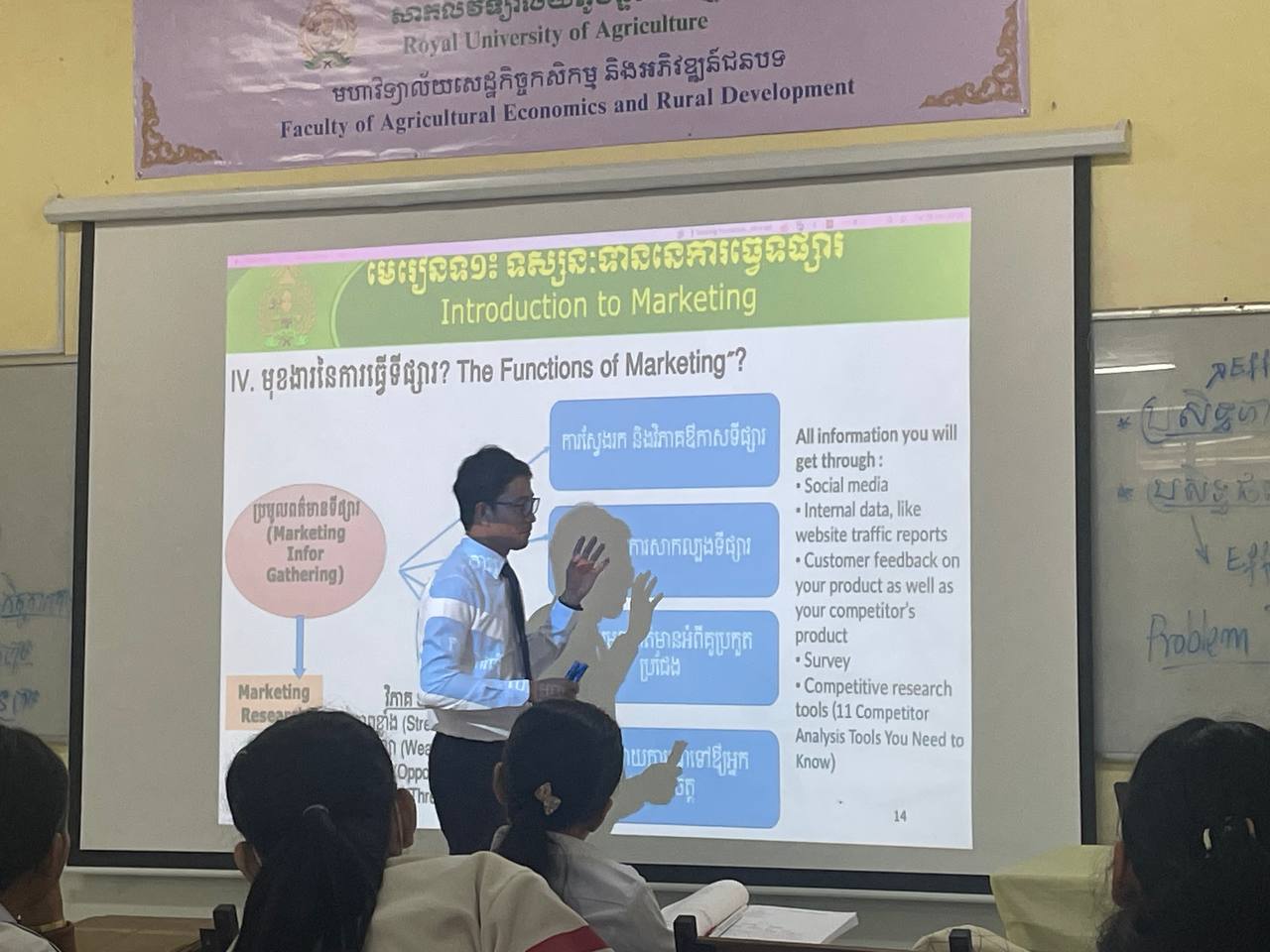

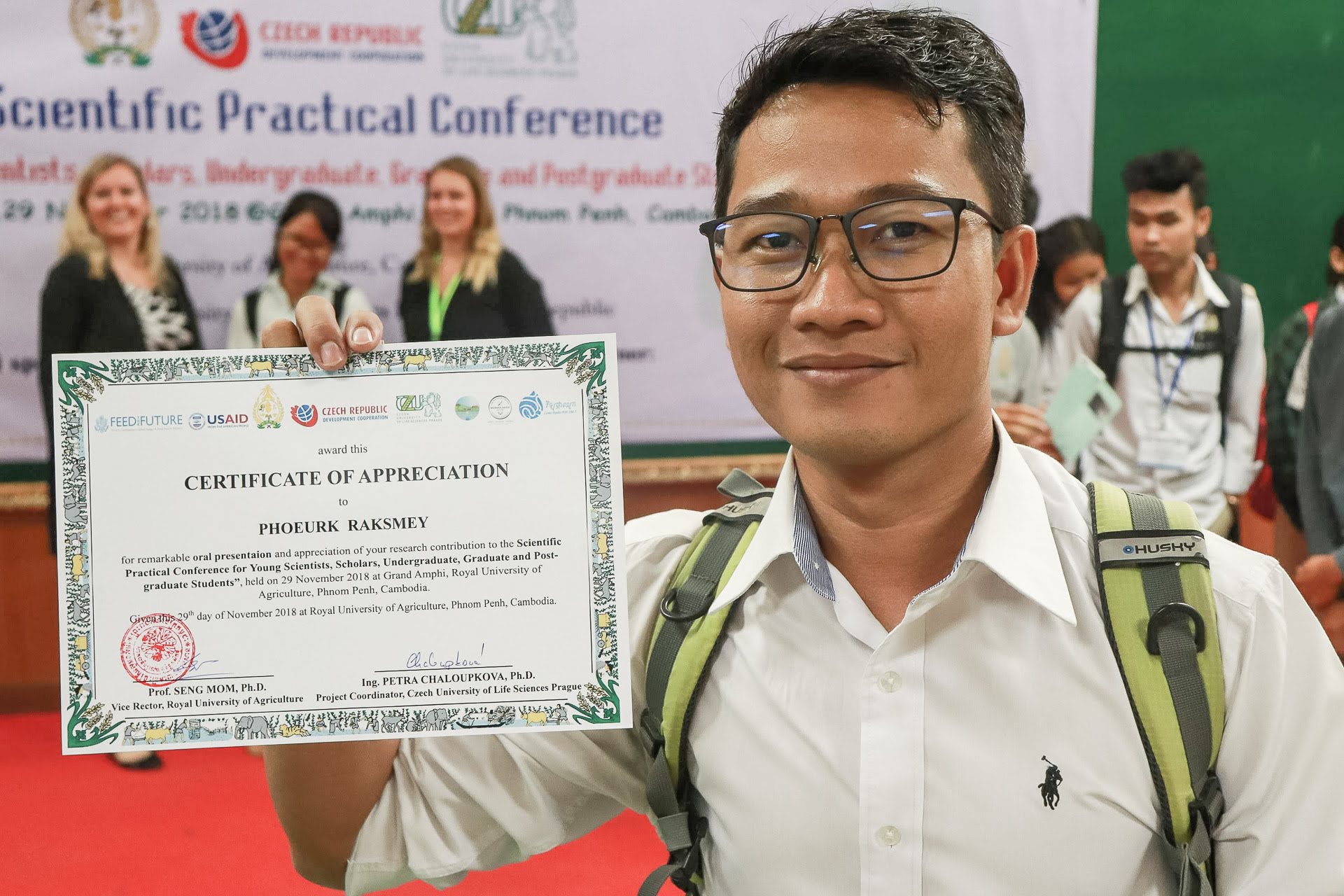
FTZ alumnus Raksmey Phoeurk is an inspiring young researcher whose work is helping to strengthen food safety, empower local producers, and bring innovation to Cambodia’s traditional fish market. A 2017 graduate of the International Development and Agricultural Economics (IDAE) program, he is now pursuing a Ph.D. in Belgium, focusing on consumer behavior and the smoked fish market in Cambodia.
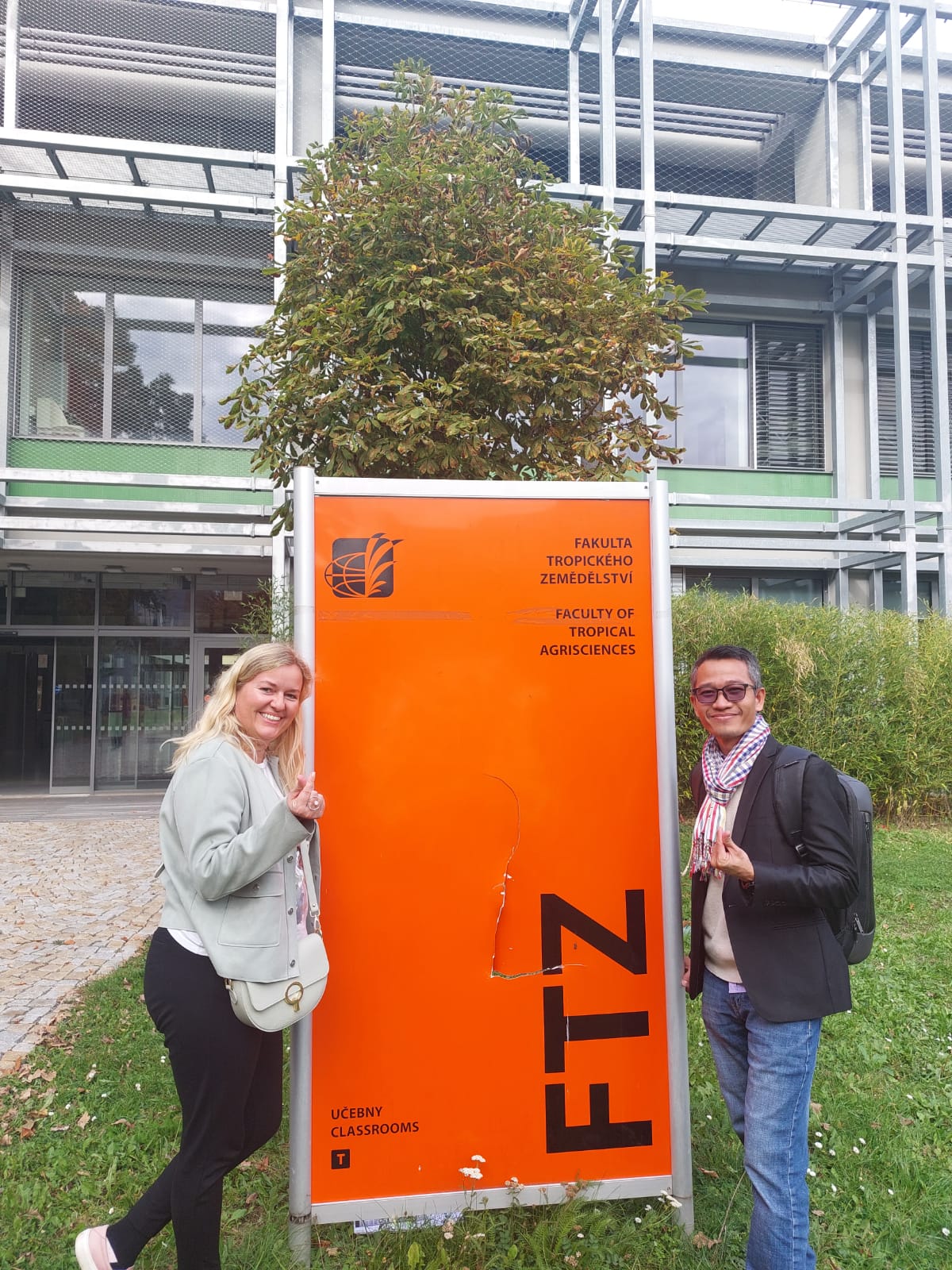
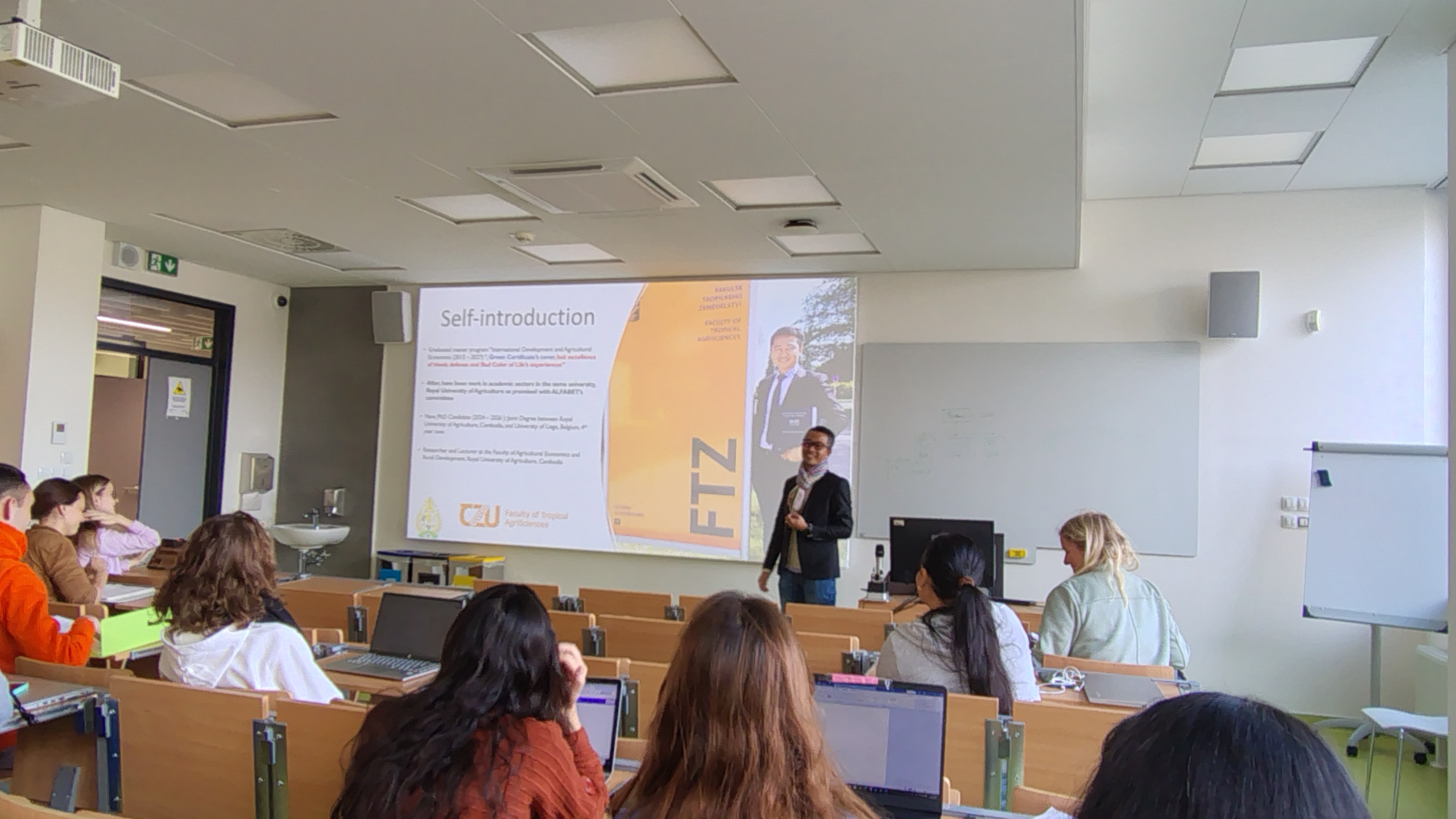
During his visit to the Faculty of Tropical AgriSciences, he was warmly welcomed back to his alma mater as part of a staff mobility exchange, where he delivered lectures and collaborated with colleagues at Faculty of Tropical AgriSciences (FTZ).
Raksmey Phoeurk
- Year of graduation and obtained degree: 2017, M.Sc. Degree
- Study Program: International Development and Agricultural Economics (IDAE)
- Current position and institution: Ph.D. student (in fourth year) in a joint degree program between the Faculty of Agricultural Economics and Development at the Royal University of Agriculture (RUA) in Cambodia and the University of Liege in Belgium (Gembloux Agro-Bio Tech faculty)
---------------------------------------------------------------------------
In this interview, Raksmey shares insights into his current Ph.D. research, the motivations behind his focus on traditional Cambodian food products, and how his studies in Prague helped shape his academic journey.
- How did your journey lead you back to your alma mater? I was in the Czech Republic through staff mobility between our two faculties, providing lectures on consumer behavior and meeting with colleagues to discuss research methodology, consumer surveys, and farming systems in Cambodia. We maintain strong cooperation between RUA and the Faculty of Tropical AgriSciences through Dr. Petra Chaloupková, dr.h.c.. I have been involved in scientific days, workshops, and soft-skill training. I also participated in training sessions organized with Dr. Petra Chaloupková, dr.h.c. in Cambodia.
- What motivated you to study consumer behavior and focus on the smoked fish market in Cambodia? Smoked fish has been part of traditional Cambodian cuisine for generations. It is one of the main processed fish products, along with dried and fermented fish. Fish contributes about 70% of total nutritional intake in Cambodia. However, traditional processing methods often affect quality and safety. My Ph.D. is part of a project that aims to improve the quality and safety of smoked fish
- How is your PhD research connected to your previous studies at our faculty? My studies here gave me strong foundations in economics, farming systems and project management, research methodology and so on. Courses like Management led by Dr. Petra Chaloupková, dr.h.c. were especially helpful. They taught me how to plan, manage, and achieve goals in my Ph.D. project. Research methodology and statistics courses were challenging but extremely useful. Econometrics, though difficult, became essential for understanding which models and analytical tools to use in my research.
- How is studying in Belgium different from studying here? The environment in the Czech Republic felt more dynamic and collaborative – Ph.D. students here are very active, regularly meeting to discuss topics, share experiences, and reflect on their work. In Belgium, supervision is strong, but there are fewer group activities, so self-motivation is very important
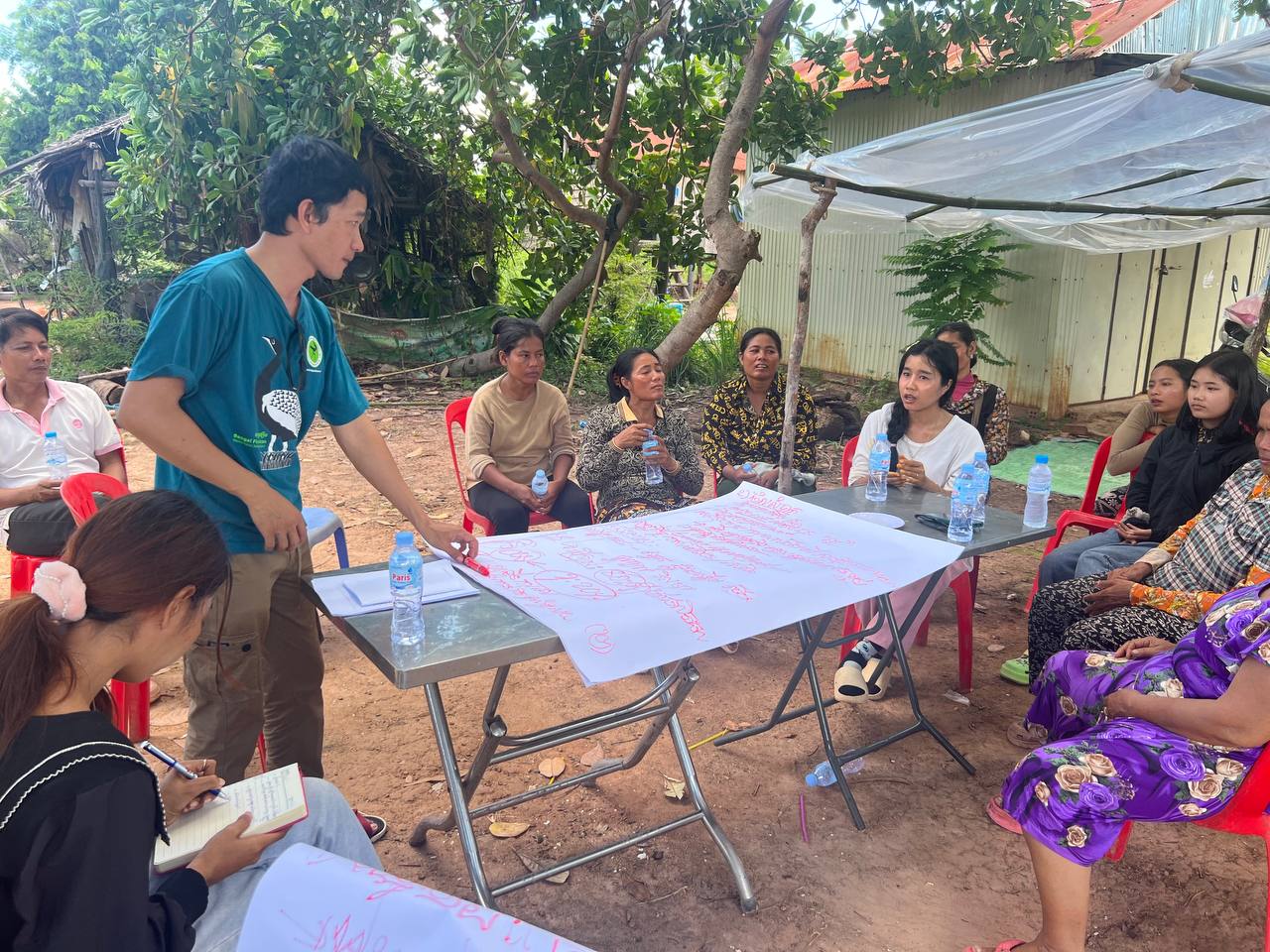
- What challenges or findings have you encountered in your fieldwork? The biggest challenge has been conducting extensive fieldwork and interviews with consumers and processors. It is time-consuming but rewarding, as it helps me understand the social context of smoked fish production. I will begin the final data collection after returning to Cambodia and I expect to complete my Ph.D. by October next year.
- How does your research contribute to local communities and food market development? My research will contribute to several main aspects. Firstly, it focuses on local communities and their livelihoods. Through better market linkages, they will have more potential to connect to the market. As their products improve, consumers will be more willing to pay for them, allowing the producers to increase their income. Secondly, it relates to public health. This research will provide significant solutions and recommendations in a policy brief. We aim to improve quality standards and support local processors to change their behaviour and adopt new innovations in processing.
- What are your plans after completing your Ph.D.? I plan to continue my academic career at the RUA. I currently serve as the Director of the Center of Excellence on Agricultural Economics and Rural Development, where I oversee several projects. After completing my Ph.D., I aim to focus more on research and teaching.
- Why did you decide to study at our faculty? Through the ALFABET project, I learned about various universities, and I chose the Czech Republic as my first option. I had already met Czech lecturers and students who came to Cambodia for summer schools, and that inspired me. The Czech Republic offered an attractive academic environment, good living conditions, and realistic language requirements, so I decided to apply here.
- Do you have a favourite memory from your studies here? Yes, definitely. I loved the campus environment and student facilities. I have fond memories of international events like food fairs, where we shared Cambodian food and dance performances, and trips outside Prague with classmates. The community atmosphere was very friendly and inclusive.
- What advice would you give to current or future students interested in studying at our faculty? I would strongly encourage them to apply for scholarships such as government or Erasmus programs. The faculty has developed significantly since I studied here, with new infrastructure, active research teams, and more interdisciplinary projects. The programs are well-structured and increasingly relevant to global challenges. Alumni, including myself, are proud of the education we received and actively promote the faculty to future generations.