
| Target country: | Cambodia |
| Coordinator of the project | Petra Chaloupková |
| Project team: |
Olga Leuner, Miloslav Petrtýl, Simona Tomanová, Martin Richter |
| Partners of the project: |
Royal University of Agriculture, National University of Battambang |
| Budget | 1 115 000,- CZK |
| Duration: | 2026 |
The project “AgriConnect Cambodia – Digital Skills and Research for the Future”, implemented in cooperation between the Royal University of Agriculture (RUA) and the National University of Battambang (NUBB) in Cambodia, and the Czech University of Life Sciences Prague (CZU), aims to strengthen academic cooperation and research capacities in the Cambodian agricultural sector through digital innovation, international networking, and open science. Key activities include: (i) a two-week summer school focused on developing digital skills (including AI tools) and the use of modern technologies for teaching and research in agricultural production; (ii) an international symposium on sustainable agri-food systems; and (iii) the establishment of a research platform to support the publication of high-quality open-access articles. The project will contribute to the development of digital and research skills among students and academics, increase the visibility of Cambodian research within global scientific communities, and support sustainable agriculture and food production in Cambodia.
Output 1. AgriConnect Digital Skills: Digital Competence Training and Summer School for Sustainable Agriculture
Objective 1: Development of Digital Skills and the Use of AI To strengthen the capacities of students and academic staff of RUA, NUBB, and CZU in the use of digital tools and artificial intelligence (AI) for data processing, analysis, and visualization, with the aim of enhancing research quality and scientific outputs. Output 1 is divided into two activities focused on the preparation and implementation of the Summer School “Digital Skills for Sustainable Agriculture”.
- Activity 1.1 focuses on the preparation of a two-week summer school, including the development and pilot testing of educational materials, preparation of the programme, and the organization of a selection process for participants.
- Activity 1.2 covers the organization and implementation of the summer school itself.
Output 2. AgriConnect Knowledge & Networking Hub: International Symposium, Scholarships, and Promotion
Objective: Support for Scientific Communication and International Cooperation To create opportunities for knowledge sharing, networking, and joint educational activities that connect academia, practice, and international partners. Output 2 includes activities aimed at strengthening international cooperation, sharing expert knowledge, and raising awareness of educational and development opportunities.
- Activity 2.1 focuses on organizing the international symposium “Sustainable Agri-Food Systems” as a platform for exchanging experiences among academia, public administration, and practitioners.
- Activity 2.2 aims to promote Czech Government scholarships, increasing awareness among students and young professionals about study opportunities in the Czech Republic.
- Activity 2.3 focuses on the dissemination of project results to the public in order to enhance project visibility, transferability of outputs, and long-term impact.
Output 3. AgriConnect Science: Research Platform for Open Science
Objective: Increasing Publication Capacity and Open Access to Scientific Outputs To support Cambodian researchers in the preparation and publication of high-quality scientific articles in an open-access regime, particularly in the areas of food processing, consumer behavior, and sustainable agriculture. This includes mentoring, methodological support, and financing of article processing charges (APCs). Output 3 aims to strengthen research capacities, open knowledge sharing, and international cooperation in sustainable agriculture and consists of two activities.
- Activity 3.1 focuses on establishing the AgriConnect Science research platform, serving as a tool for sharing research data, methodologies, and results in line with Open Science principles.
- Activity 3.2 centers on the organization of the “Open Science Training Week”, aimed at developing the competencies of early-career researchers and academic staff in the areas of open science, research data management, scientific publishing, and international research collaboration.
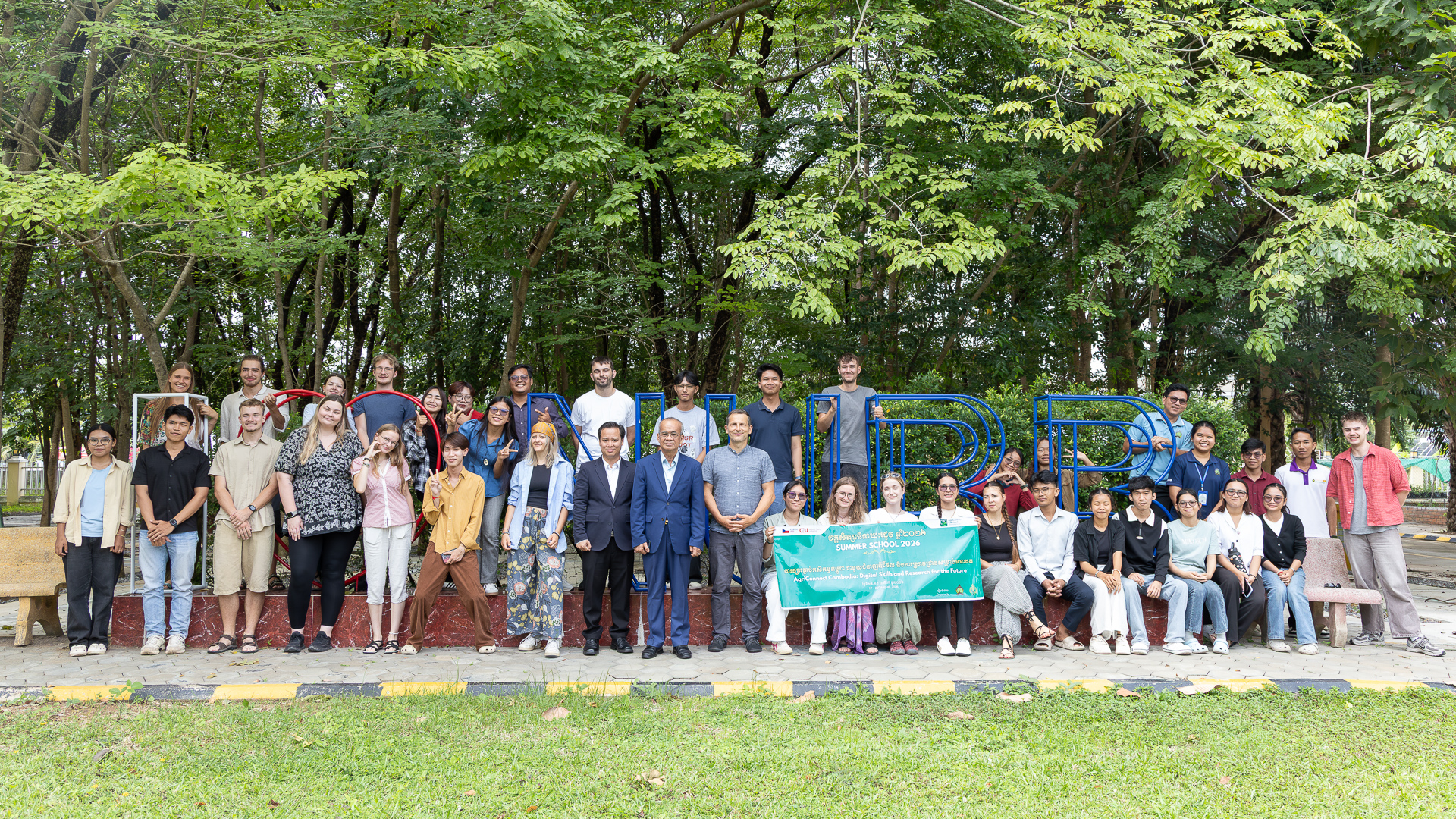
Summer School in Cambodia: CZU students explore local agriculture and research
How do food value chains work in Cambodia? How should data be collected and evaluated in the field? What is the adoption rate of AI tools within the academic environment of Southeast Asia? These were the key topics explored by students from the Czech University of Life Sciences Prague (CZU) during the international summer school AgriConnect Cambodia: Digital Skills & Research for the Future.
Over the course of two weeks, the students visited two local partner institutions: the National University of Battambang (NUBB) in Battambang Province and the Royal University of Agriculture (RUA) in the capital city of Phnom Penh. The project team, led by Dr. Chaloupková, maintains long-standing cooperations with local colleagues at both institutions.
Food Production and Distribution
The central theme of the summer school revolved around value chains and their underlying principles within local production, processing, and distribution of food and agricultural commodities. Students were also introduced to the research conducted by their Cambodian peers, gaining insight into current priority topics addressed by local universities. They directly applied theoretical knowledge through practical assignments. Working in mixed student teams, they conducted interviews with customers at local markets, utilizing structured questionnaires to collect field data on consumer awareness and preferences regarding vegetable certification standards. The teams subsequently analyzed the data and presented their findings.
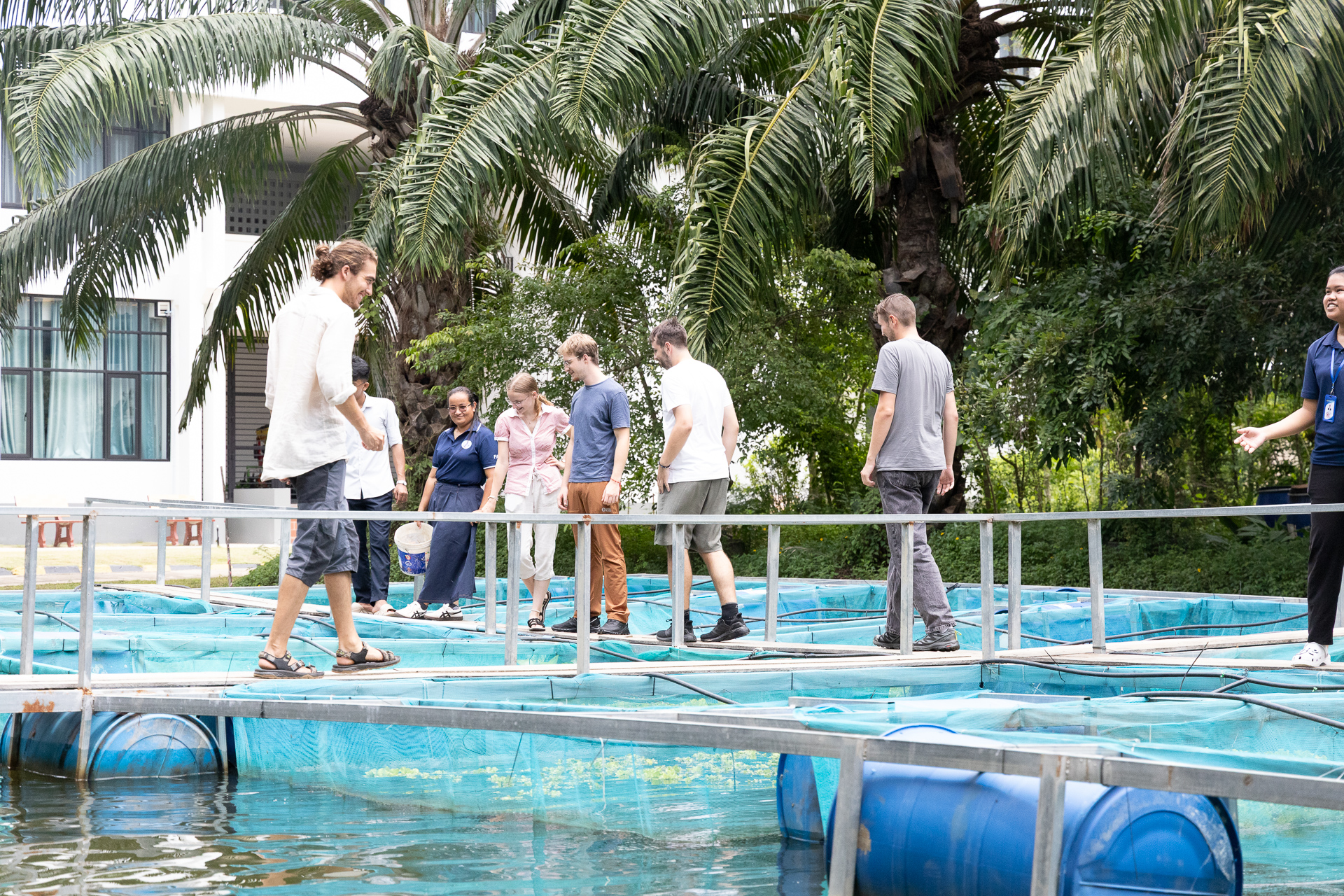
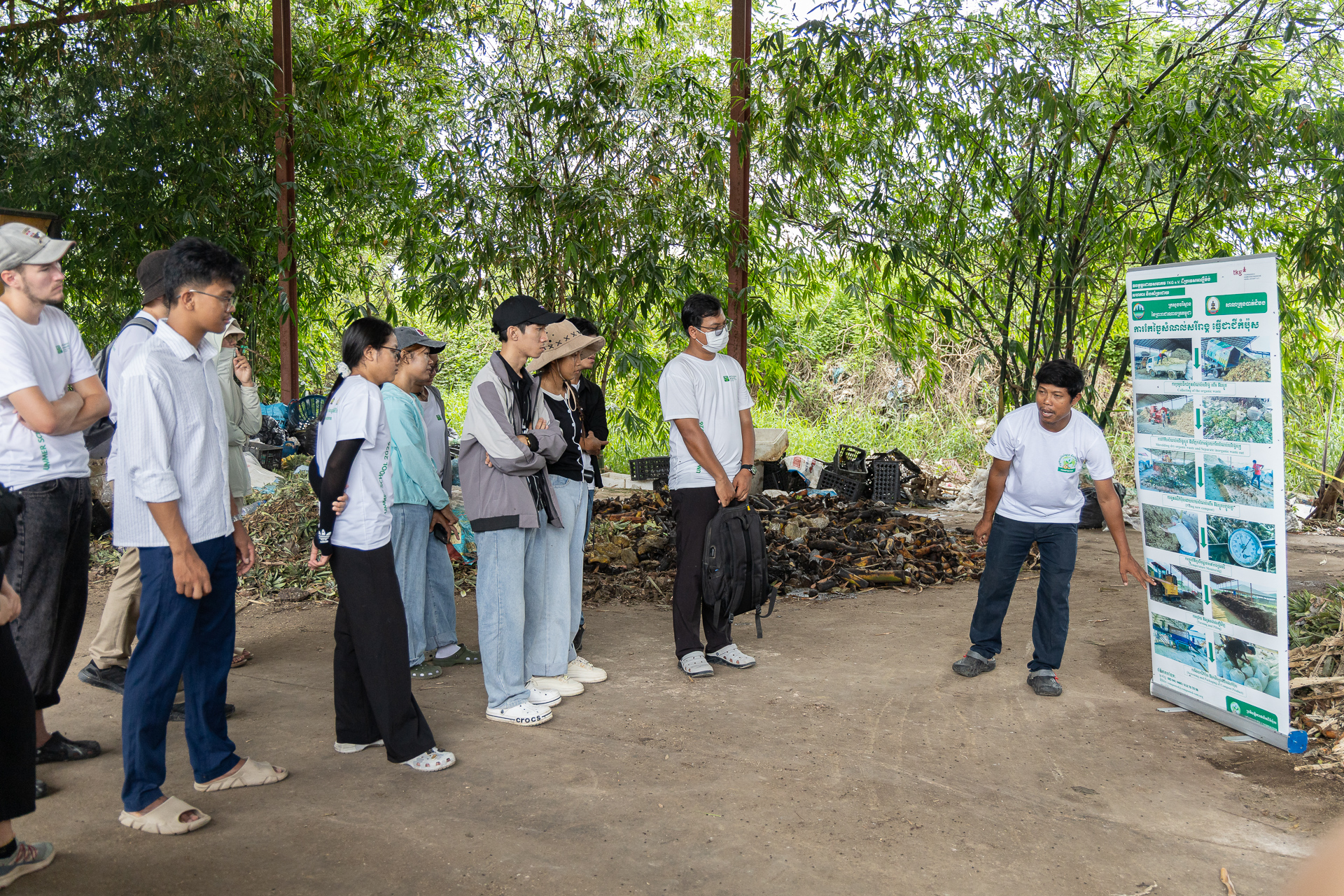
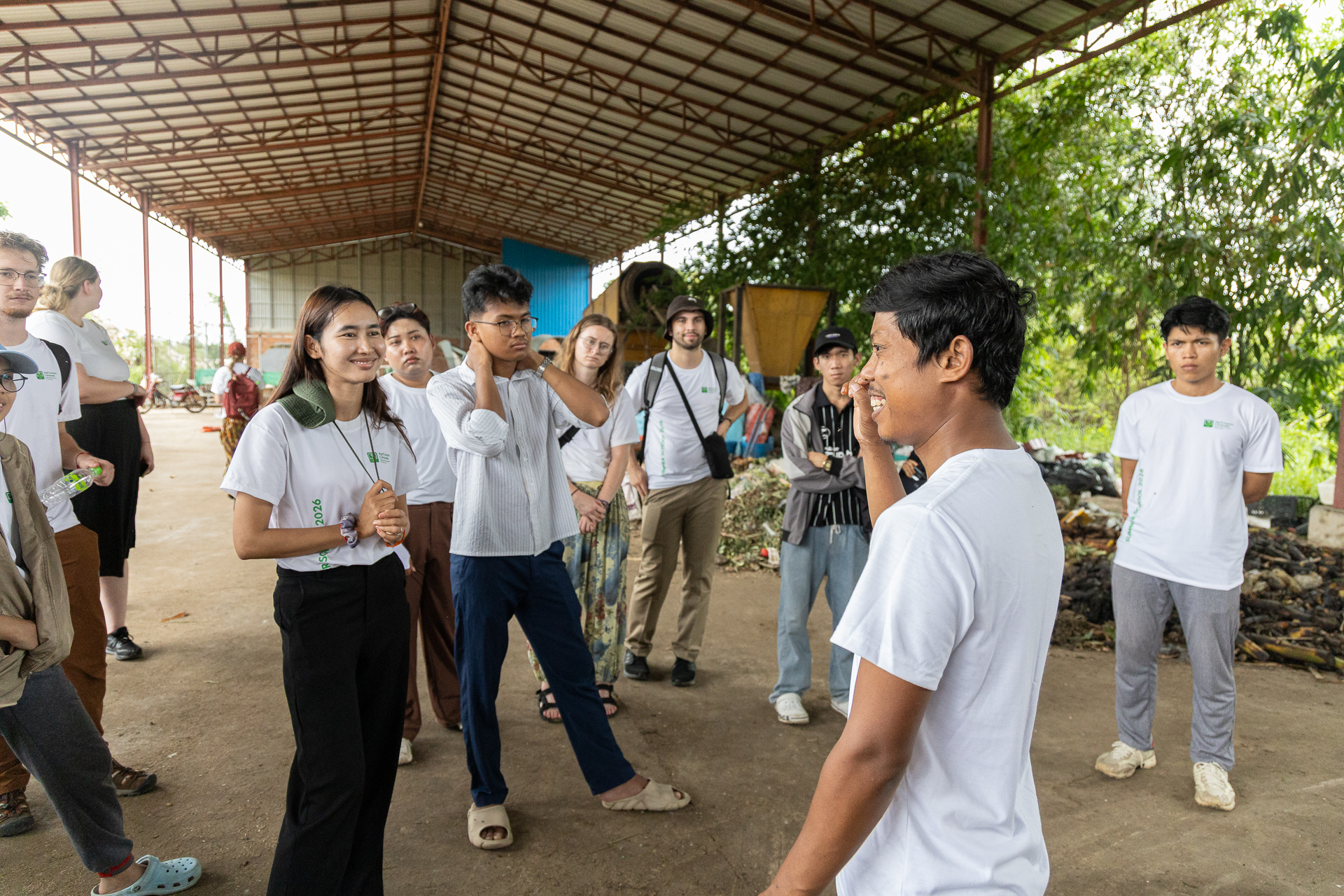
The program included practical field excursions that offered students an inside look into the daily operations of local enterprises. This allowed them to better understand how value-added products are developed across various levels of localization and production scales. A visit to a local organic waste processing and composting facility, as well as a local fertilizer production unit, provided valuable contrast. Local production of both segments plays a crucial role in enhancing accessibility of those inputs for smallholder farmers.
An authentic example of a local value chain was demonstrated during a visit to a small-scale fish processing facility specializing in fermented fish products, an essential component of Cambodian cuisine and nutrition. The facility practices zero-waste whole-fish processing: muscle tissue is transformed into fermented fish paste, while the skins and scales are repurposed into fried snacks and a gelatinous source of collagen.
Global Trade and Marketing
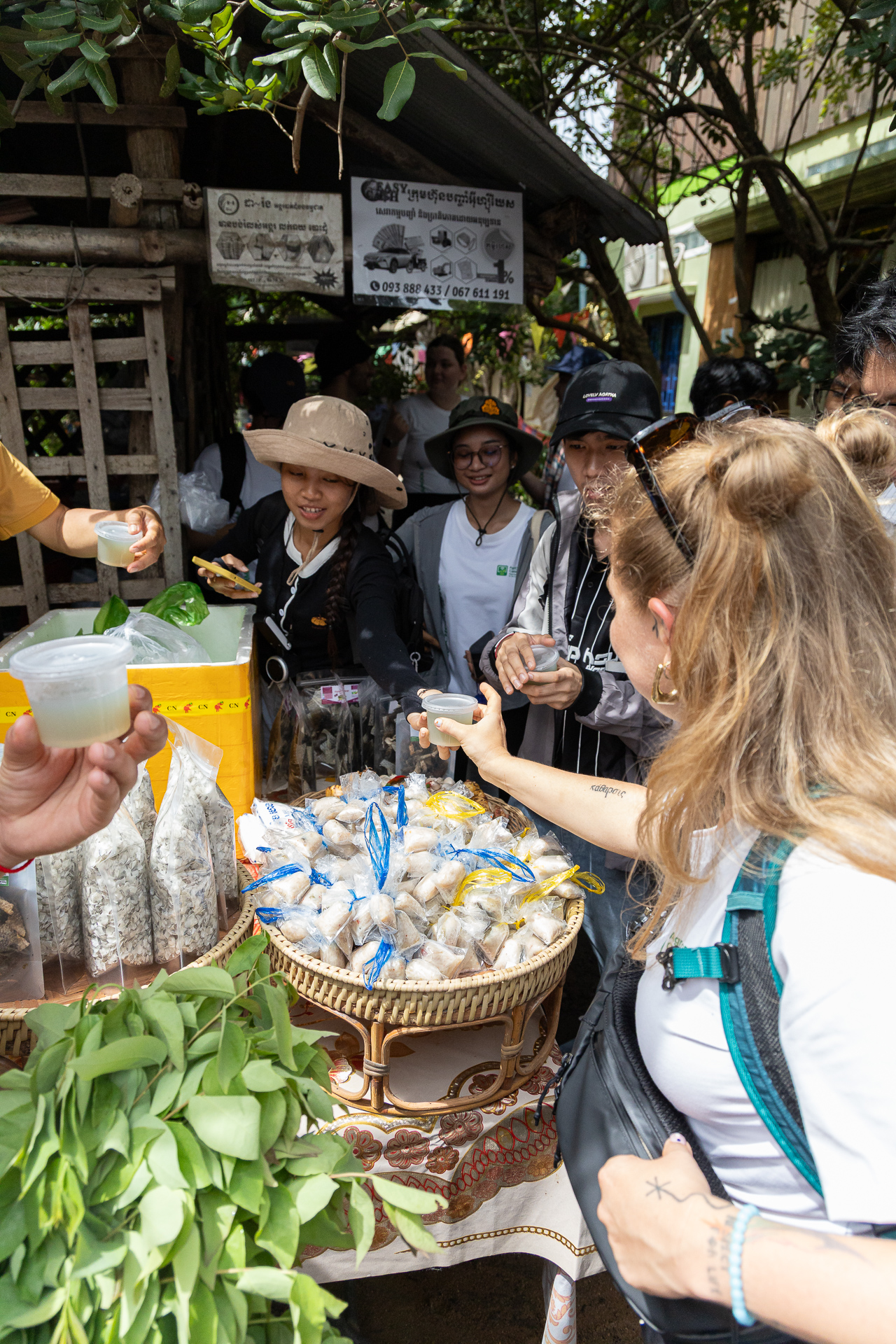
In the capital city Phnom Penh, students visited the modern, large-scale beverage manufacturing factory Khmer Beverages, representing one of the rapidly growing sectors of Cambodian food production. A notable contrast to regional producers was provided by a visit to an international agricultural trade fair, where students observed agricultural technologies and food producers from across Southeast Asia, accompanied by product tastings. The Smart Agri Cambodia project, also implemented by a team from CZU, was represented with its own exhibition stand.
The AgriConnect Cambodia summer school is part of a long-term collaboration between the Faculty of Tropical AgriSciences (FTA) at CZU and Cambodian universities. Its primary objective is to share knowledge and expertise while strengthening the digital and research capacities of young professionals who will address future challenges in sustainable agriculture, food security, climate change adaptation, and rural development.
The AgriConnect Cambodia project is coordinated by the Vice-Dean for International Relations of the FTA, Ing. Petra Chaloupková, Ph.D., dr. h. c. The summer school is led by Ing. Miloslav Petrtýl, Ph.D., with the active involvement of FTA doctoral researchers Ing. Martin Richter and Ing. Simona Tomanová.